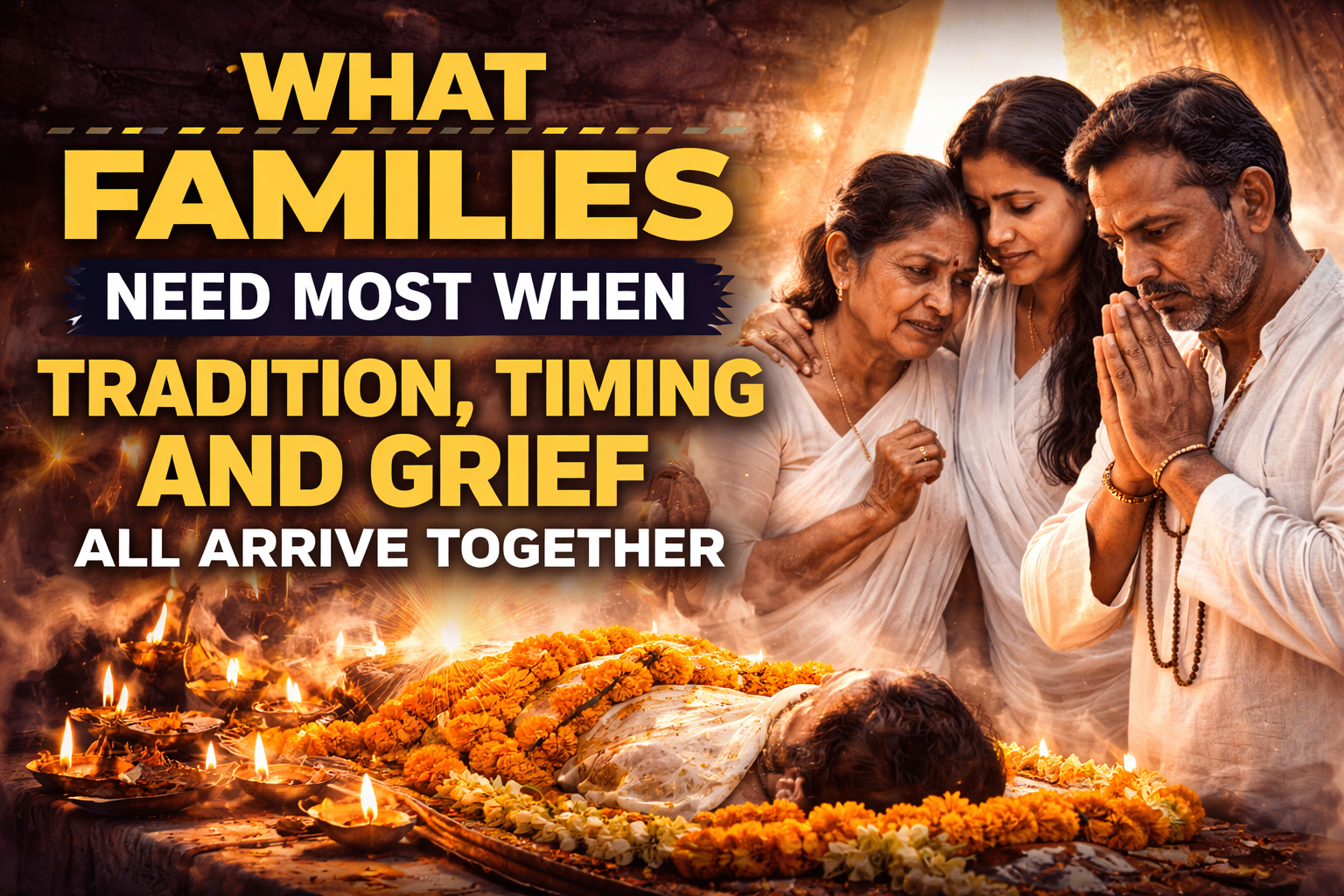
Some farewells ask more of a family than logistics alone.
They ask for religious understanding, cultural care, emotional steadiness and a way through practical decisions at a time when no one feels especially equipped to make them. When traditions matter deeply, the pressure can feel even sharper. Families are not only trying to arrange a funeral. They’re trying to honour a person properly within customs that carry real spiritual and communal meaning.
That’s why people often seek Hindu funeral services in Sydney from providers who understand that the process involves far more than booking times and organising transport. In these moments, support needs to be respectful enough to protect the tradition and calm enough to help the family through what can otherwise feel overwhelming very quickly. Because when timing, grief and ritual all arrive together, the smallest practical decision can feel much heavier than it would on an ordinary day.
Familiar Traditions Can Still Feel Hard to Carry in the Moment
Families may know the customs.
That doesn’t mean it feels easy to carry them while grieving. Loss changes everything about decision-making. Even when the ritual structure is familiar, the emotional state of the people involved is not. They may be exhausted, shocked, trying to support elders, trying to coordinate family members, and trying not to lose the meaning of the farewell under the weight of urgent arrangements.
That’s where the right support matters so much. Not support that treats the service as generic, but support that understands why sequence, preparation and religious sensitivity matter. In a Hindu funeral context, those details are not decorative. They form part of the meaning of the farewell itself.
Families often need someone who can help hold the practical side together without flattening the ritual into a checklist. That distinction makes a great difference in how the whole experience feels.
Timing Pressure Can Make Grief Feel Even Heavier
Funeral arrangements always involve timing.
When cultural and religious traditions shape those timings closely, the pressure can intensify. Families may feel as though every decision needs to happen quickly and correctly, while they are still trying to process the loss itself. That combination can create a sense of emotional compression; grief, responsibility and urgency all arriving in the same space.
This is one reason calm guidance matters more than dramatic reassurance. Families do not usually need grand speeches. They need clarity. They need someone who understands the process well enough to reduce confusion rather than add to it. And they need enough sensitivity that they do not feel they are having to defend or explain the importance of their traditions at every step.
The more supported that process feels, the more room the family has to stay connected to what the farewell is actually for.
Respect Means More Than Being Polite
There’s a difference between respectful service in a general sense and culturally informed support in a meaningful one.
Politeness is not enough when a funeral carries specific religious and ceremonial requirements. Families often need confidence that the people helping them understand the significance of the rituals, the importance of timing, and the care needed around family roles and spiritual practice. Without that, even well-intentioned support can feel disconnected from the needs of the moment.
This matters because a funeral is not only an event. For many Hindu families, it is part of a larger spiritual and familial obligation. The service must feel properly held, not only efficiently arranged. When that happens, the family can move through the experience with more trust and less fear that something meaningful has been mishandled.
And in grief, trust is a very practical kind of comfort.
The Best Support Gives Families Space to Focus on the Farewell
What families need most when tradition, timing and grief all arrive together is usually not complexity. It is steadiness.
They need the practical arrangements handled with care. They need cultural understanding without awkwardness. They need enough structure around the process that they can remain present for the emotional and spiritual reality of the farewell. Most of all, they need to feel that the traditions shaping the service are being respected not as an add-on, but as central to what the day means.
That’s what makes support genuinely helpful in these moments. It doesn’t push the family into a generic model of grief. It helps hold the practical side in a way that protects meaning.
And when the farewell carries deep significance, that kind of support matters more than people can usually explain until they are the ones needing it.