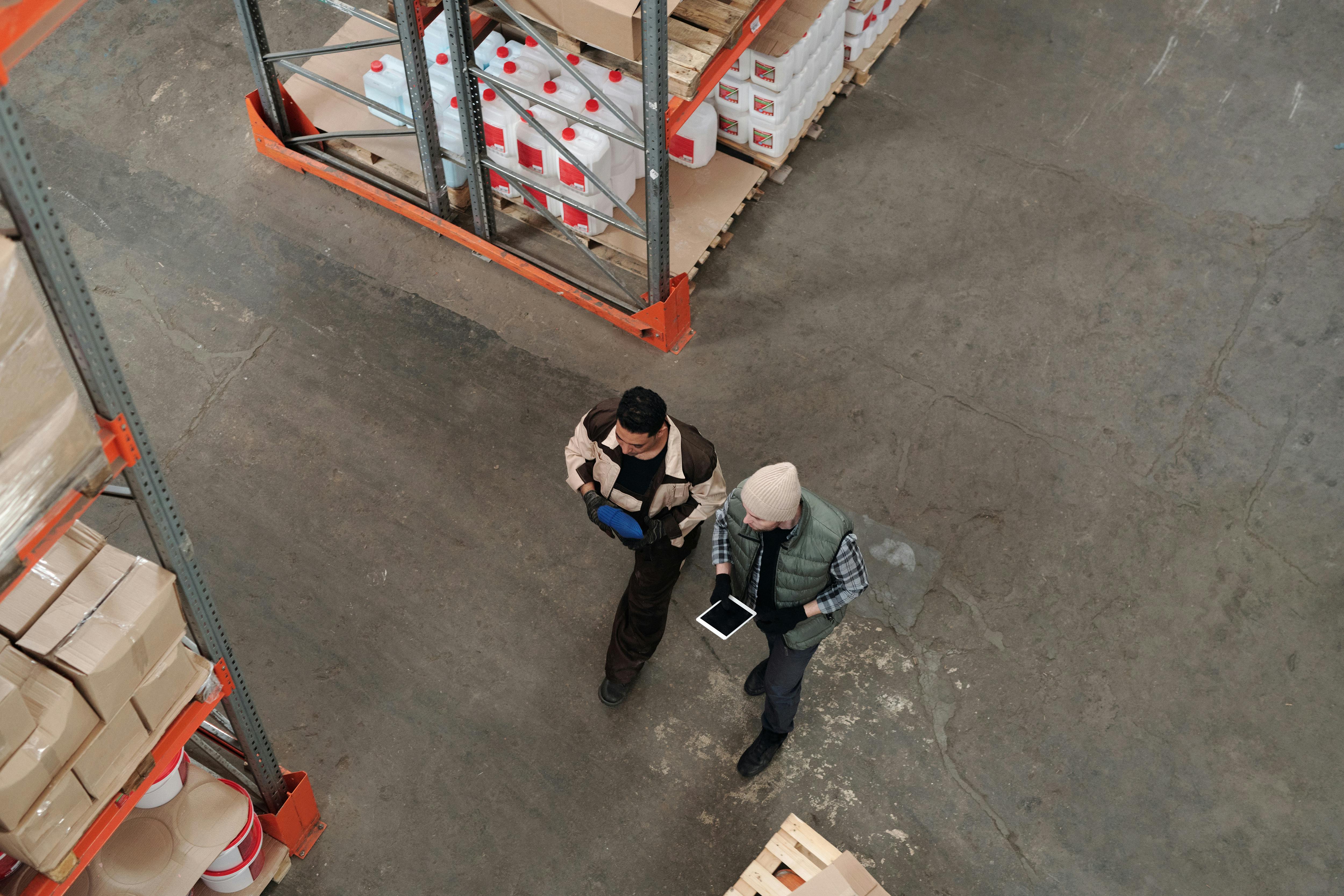
In most warehouses, delays don’t come from a lack of effort. They come from systems that were never designed for the way the business actually operates today. As order volumes fluctuate, product ranges expand, and delivery expectations shorten, many facilities find themselves working harder without really working faster.
 Photo by Tiger Lily: https://www.pexels.com/photo/men-working-in-a-warehouse-4481256/
Improving speed is less about pressure and more about removing friction. The fastest operations tend to focus on flow, layout, and decision-making rather than raw output.
Here are four of the most effective ways Australian warehouses are improving throughput in practical, sustainable ways.
Reassess Equipment Based on Current Needs, Not Legacy Decisions
One of the most common sources of inefficiency is equipment that no longer matches how a warehouse actually functions.
Many facilities still rely on machines that were selected years ago for a different scale of operation, different product dimensions, or different picking strategies. Over time, those tools quietly become mismatched to real workloads. Forklifts may struggle with higher racking. Pallet jacks may slow down long travel distances. Fixed lift systems may restrict layout changes.
Rather than upgrading for power, the most effective warehouses upgrade for adaptability. They choose equipment that can handle multiple tasks, move easily between zones, and respond to seasonal or operational shifts without forcing a redesign of the entire workflow.
Speed improves when machines fit the process, not the other way around.
Brisbane Lesson: Why Vertical Movement Is Often the Real Constraint
In Brisbane, many warehouses operate in mixed-use industrial zones with high racking, outdoor loading areas, and frequent container movement. This creates a particular kind of operational bottleneck: vertical access.
When goods can move horizontally with ease but stall when they need to be lifted, stacked, or repositioned at height, delays ripple across the entire facility. Workers end up waiting for equipment, improvising unsafe solutions, or breaking down loads unnecessarily.
This is why many Brisbane operators are increasingly turning to telehandler hire Brisbane instead of relying exclusively on traditional forklifts or fixed lifting systems. Telehandlers offer reach as well as lift, which means they can place loads directly onto higher racking, handle awkwardly shaped goods, and operate effectively across uneven or transitional surfaces.
The practical advantage is not just speed, but flexibility. Layouts don’t need to be rebuilt around static equipment. Temporary storage zones can be created without disrupting flow. High-volume periods can be handled without permanent capital investment.
Hiring rather than purchasing also allows facilities to scale capacity only when needed, reduce maintenance downtime, and access newer, more efficient machines without long-term lock-in. For many Brisbane warehouses, this approach has proven more responsive to real-world conditions than fixed infrastructure.
Sydney Lesson: Dock Congestion Is a Bigger Problem Than Picking Speed
Sydney warehouses often operate under intense space constraints, with high throughput expectations and limited room for physical expansion. In these environments, inefficiency rarely comes from slow picking. It usually comes from congestion at loading and unloading points.
When inbound and outbound goods overlap poorly, docks become choke points. Pallets stack up. Vehicles wait. Staff spend more time coordinating movement than actually moving anything.
The fastest Sydney facilities design their operations around flow through the dock, not just storage within the warehouse. This often means restructuring how goods move through the building rather than how they are stored.
Cross-docking strategies, real-time scheduling systems, and clearly separated traffic lanes can significantly reduce congestion. Instead of storing goods first and moving them later, many operations now focus on transferring inventory directly from inbound to outbound lanes whenever possible.
This doesn’t just reduce handling time; it reduces error rates and physical fatigue as well.
Melbourne Lesson: Automation Works Best When It Supports, Not Replaces
Melbourne has seen a strong push toward warehouse automation, but the most successful examples are rarely the most complex ones.
Rather than attempting to replace human labor, effective automation tends to remove friction from repetitive or cognitively draining tasks. This includes inventory tracking, dynamic slotting, pick-path optimization, and maintenance scheduling.
When workers no longer have to search for items, double-check stock locations, or manually record movements, their attention can shift to accuracy, problem-solving, and quality control.
Automation becomes most useful when it operates quietly in the background, improving decision-making rather than dictating it.
Warehouses that treat automation as a support system rather than a control system often see smoother operations and fewer disruptions.
Why Speed Is a Structural Issue, Not a Motivation Issue
It’s tempting to think of speed as a human problem. Work harder. Move faster. Push more.
In practice, that approach usually backfires. Errors increase. Injuries become more likely. Burnout rises. Speed is primarily a design problem.
When layout, equipment, scheduling, and data systems are aligned, work becomes naturally faster without becoming more stressful. Movement becomes predictable. Bottlenecks are visible before they form. Teams spend less time reacting and more time executing.
The most effective warehouses don’t rush. They remove the need to rush.