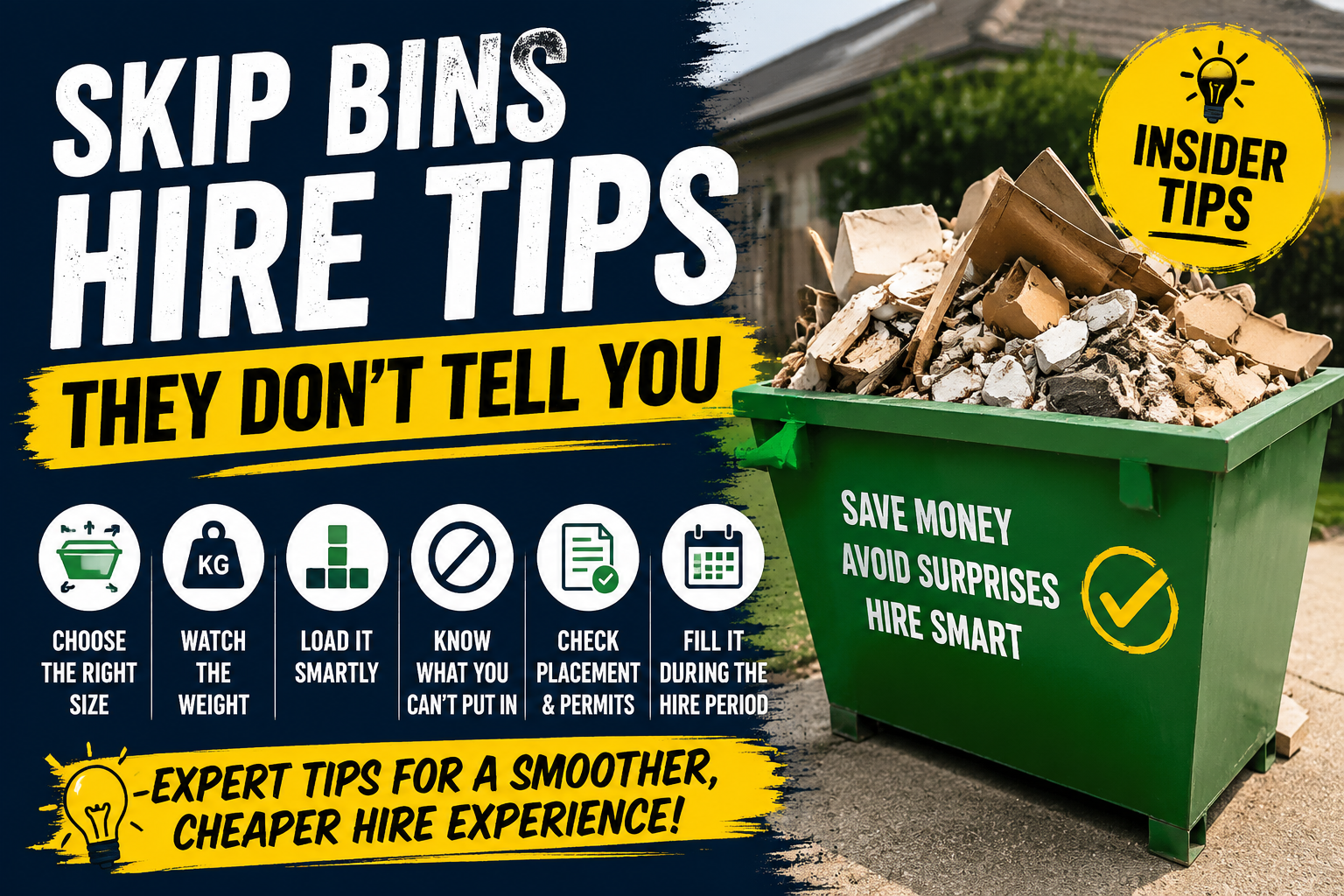
Hiring modern skip bins seems simple enough, and mostly it is. But there are a handful of things that experienced hirers know and first-timers usually learn the hard way. A few insider tips can save you money, avoid surprises, and make the whole process run more smoothly.
Here are the skip bin hire tips they don't always tell you upfront.
Size up rather than down
It's tempting to save money by choosing a smaller bin, but running out of space is a false economy. If you fill a bin and still have waste left over, you're up for a second delivery and collection fee, which costs more than simply hiring a larger bin in the first place.
When you're weighing up two sizes, going with the bigger one is usually the smarter, cheaper choice. People almost always generate more waste than they expect, especially with renovations.
Understand weight limits
Here's something that catches people out: volume isn't the only thing that matters. Many skips have weight limits, and heavy materials like soil, concrete, bricks, and tiles add up fast. Fill a large general bin with rubble and you can easily exceed the limit.
For heavy waste, ask about a dedicated heavy-materials bin. Understanding the weight side of things upfront helps you avoid unexpected excess charges when the bin is collected.
Load the bin smartly
How you load a skip makes a real difference to how much fits. Break down bulky items, place flat items flat, fill gaps with smaller pieces, and load heavier things at the bottom. Simply throwing everything in leaves a lot of wasted air space.
A well-packed bin can hold significantly more than a carelessly filled one, so a little effort here effectively stretches the size you've paid for.
Know what you can't put in
Not everything can go in a skip, and prohibited items can cause problems. Hazardous materials, chemicals, asbestos, and certain other items are not allowed and require special disposal, and putting them in can attract charges or hold up your collection.
Some items like mattresses and tyres are accepted by some providers and refused or surcharged by others. When in doubt, ask before you toss it in, rather than after.
Check placement and permits
Where the bin goes matters more than people realise. If it can sit on your own property, you're fine, but placing it on the verge or road can require a council permit depending on your area.
Sorting this out before the bin arrives avoids any issues while it's on site. A good provider can usually advise, so it's worth asking when you book rather than assuming.
Fill it during the hire period
Skip hire usually comes with a set number of days, so plan to do your loading within that window. If you think you'll need longer, ask about extending the hire period upfront rather than scrambling at the end.
Knowing your timeframe helps you work through the job at a sensible pace and ensures the bin is full and ready when collection day arrives.
The payoff of knowing the tricks
None of these tips are complicated, but together they make skip hire cheaper, smoother, and free of nasty surprises. Sizing up, watching weight, loading smartly, and sorting placement and timing are the little things that make a big difference.
Go in with these in mind and you'll get genuine value from your skip, turning a simple hire into a well-managed part of your clean-up or project.