Home battery storage has moved from niche curiosity to mainstream consideration faster than almost any other home technology in recent memory. The reasons are practical: feed-in tariffs for exported solar have dropped steadily, retail electricity prices have climbed, and the batteries themselves have become more capable, better looking and considerably more affordable. For households that already have rooftop solar or are planning to install it the question is no longer whether battery storage is a viable idea but whether it makes sense right now for a specific home and situation. Browsing Volt X Energy's range of home solar batteries gives a clear picture of what the current generation of residential storage looks like and what it costs. This guide explains why more Australian families are making the investment, what the financial picture honestly looks like for different household types, and how to think through the decision before committing.
Why the Timing Makes Sense for Many Households
The economics of solar battery storage have shifted considerably in the past few years, moving in the direction of making batteries more compelling rather than less. Feed-in tariffs - the credit your retailer pays for solar electricity you export to the grid - have fallen in most states from the generous early rates that made exporting solar profitable. In many parts of Australia today, exporting a kilowatt-hour of solar power earns between 5 and 12 cents. Buying that same kilowatt-hour back from the grid in the evening costs between 30 and 55 cents, depending on your plan and when you use it.
A battery closes that gap. Instead of sending midday solar to the grid for a small credit, you store it and use it yourself when the panels have stopped producing. The saving per kilowatt-hour is the difference between what you would have paid for grid electricity and the small amount you would have received as a feed-in credit. Multiplied across every day of the year, it adds up to a meaningful reduction in what you pay for power.
That arithmetic has become more favourable as battery costs have fallen. The same capacity that cost considerably more five years ago is now within reach for a much wider range of households, and the technology itself, how the batteries perform, how long they last, how they look installed on a wall has improved substantially in the same period.
What a Battery Actually Does for the Home
Using your solar when you need it
The single most valuable thing a battery does is let you use your own solar generation at the times your household actually needs electricity, rather than at the times the sun is shining. For most Australian households, those two things are separated by several hours. Panels produce most strongly between ten in the morning and three in the afternoon. Households use most electricity in the mornings before work, in the evenings after it, and overnight. A battery bridges that gap.
The proportion of solar you consume yourself rather than export is called self-consumption. A household without a battery might self-consume 25 to 40 percent of what its panels produce; the rest goes to the grid. Add a battery, and that figure typically rises to 60 to 80 percent. The higher your self-consumption, the lower your grid electricity bill.
Keeping the lights on when the grid goes down
For many buyers, backup power is as important as the bill savings - sometimes more so. A battery can keep essential appliances running through a grid outage: the refrigerator, lighting, phone charging, medical equipment, and the router. In bushfire-prone regions, areas with ageing grid infrastructure, or anywhere that experiences regular storm-related outages, this is a tangible and immediate benefit rather than a theoretical one.
The duration of that backup depends on battery size and what you are running. A ten kilowatt-hour battery supplying a modest essential load lights, refrigeration, a few devices can run for eight to twelve hours. Whole-home backup for a larger household requires a larger battery and careful configuration, but it is achievable with the right system.
Protection from rising prices
Every kilowatt-hour you store from your panels and use yourself is one you have not had to buy at the prevailing grid rate, whatever that happens to be. As electricity prices continue to rise and there is no compelling case that they will not, the value of that stored energy increases correspondingly. A battery bought today at current tariff rates will generate greater savings in five years if prices rise, making the long-term financial case stronger than a static calculation suggests.
What the Numbers Look Like for Different Households
The financial return on a battery depends on factors specific to each household: how much solar you generate, how much of that you can use yourself, your retail electricity rate, your feed-in tariff, and whether you are on a flat-rate or time-of-use plan. The following three scenarios use simplified, indicative figures to illustrate the range of outcomes.
A smaller household with modest solar
A two-person household with a three-kilowatt solar system and low daytime consumption adds a five kilowatt-hour battery for around $6,000 installed. The battery shifts roughly four kilowatt-hours per day from export to self-use. At a retail rate of 35 cents per kilowatt-hour and a feed-in credit of 7 cents, the annual savings are approximately $400. The simple payback for this system is about 15 years longer than ideal and exceeds the battery's warranty period. For this household, the financial case is thin; the backup and price-protection benefits carry most of the weight.
A family with high evening use and an electric vehicle
A four-person household with a 6.6-kilowatt solar system, significant evening electricity use and an electric vehicle to charge at night adds a 13.5 kilowatt-hour battery for around $14,000 installed. On a time-of-use electricity plan with an evening peak rate near 55 cents per kilowatt-hour, the battery shifts about 9 kilowatt-hours per day from grid purchases to stored solar energy. Annual savings approach $1,750, and participation in a virtual power plant scheme adds a further $150 to $300 per year. Payback in this scenario sits in the range of seven to nine years, commercially attractive and well within the battery's expected service life.
A rural household on high grid tariffs
A rural property with a five-kilowatt solar system, grid tariffs around 45 cents per kilowatt-hour and a strong interest in backup power adds a ten kilowatt-hour battery for around $12,000 installed. The battery shifts around seven kilowatt-hours per day from export to self-use. Annual savings from the tariff differential are around $1,000, and the avoidance of outage-related disruption and pump failures, as well as remote-work interruptions, adds value that is real but harder to quantify. Simple payback is ten to twelve years, but the combined financial and resilience value makes this a compelling investment for the right rural household.
The pattern across these three scenarios is consistent: households with higher electricity tariffs, significant evening loads, electric vehicles or a strong need for backup get the best return. Those with small solar systems, low evening use or modest tariff differentials see longer paybacks and may find the non-financial case stronger than the financial one.
What to Expect Over the Long Term
Battery storage is a 10- to 15-year investment, and understanding how the technology behaves over time is important for setting realistic expectations.
Modern lithium iron phosphate batteries, the chemistry used in most high-quality residential systems today, degrade more slowly than earlier battery technologies. A practical expectation is one to three percent capacity loss per year in the early years, with slower decline thereafter. Most manufacturers warrant their batteries to retain 60 to 80 percent of their original capacity after ten years. That means a ten kilowatt-hour battery will still be providing seven to eight kilowatt-hours of usable storage a decade into its life, meaningfully reduced, but still doing useful work.
The other component that needs attention over a system's life is the inverter. Hybrid inverters, the devices that manage the flow of electricity between panels, battery and home, typically carry warranties of ten to fifteen years and will likely need servicing or replacement at some point during the battery's useful life. Budgeting $1,500 to $4,000 for an inverter service or replacement over a fifteen-year ownership period is a reasonable planning assumption.
Routine maintenance beyond that is minimal. Most modern battery systems are monitored via a smartphone app and will alert you to any performance issues. The main active maintenance task is to keep the surrounding area clear and ensure ventilation requirements are met. The physical footprint of a well-installed battery mounted on a garage or utility room wall, connected cleanly to the switchboard, requires very little attention over years of continuous operation.
How Modern Batteries Look and Where They Live
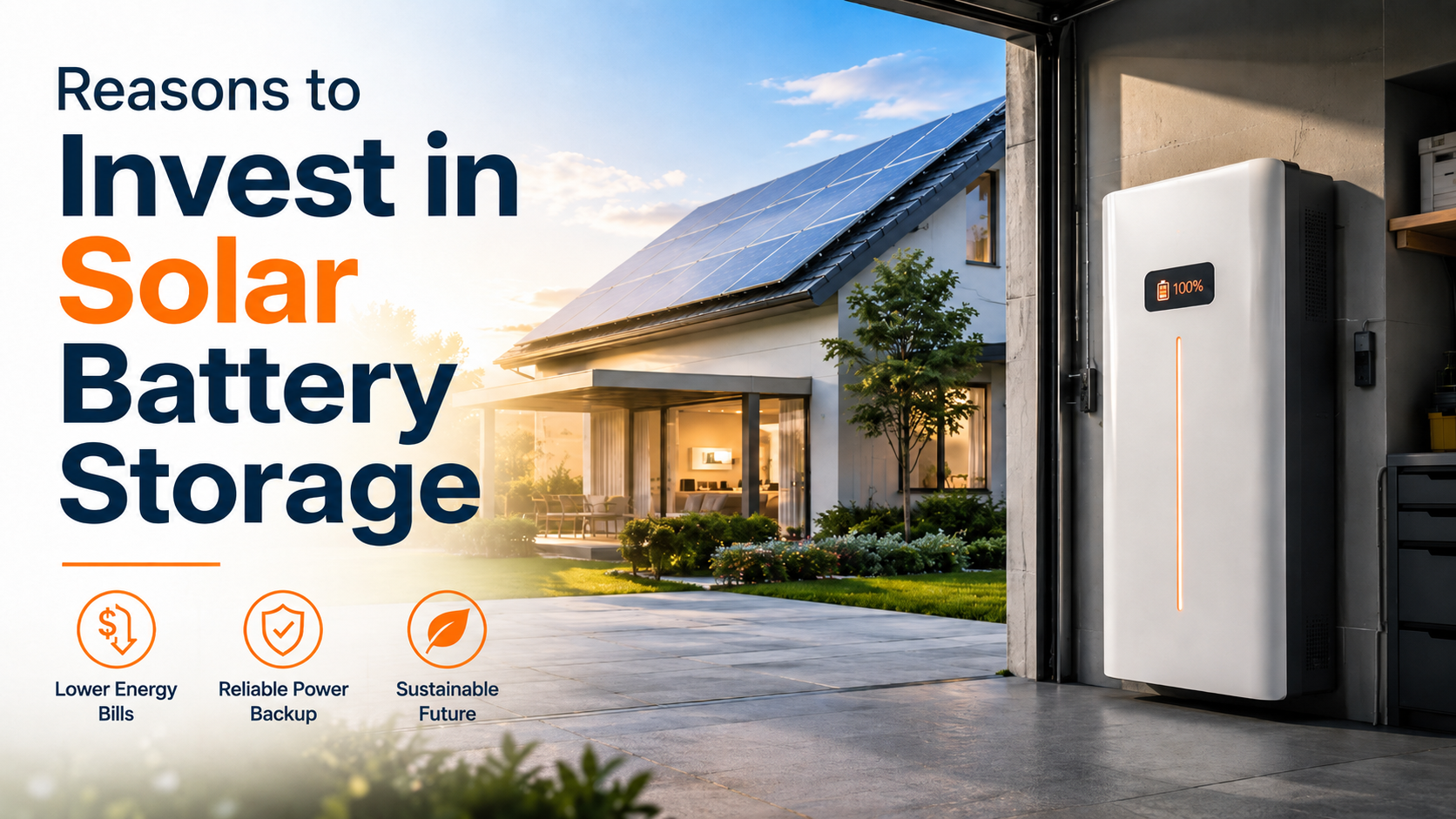
Battery storage has matured as a product category in ways that go beyond the technology. The design of residential battery systems has improved considerably, and the leading brands now produce units that look intentional rather than industrial, compact, wall-mounted enclosures in clean white or grey that sit unobtrusively in a garage or utility room without dominating the space.
Most residential batteries are installed on an interior garage wall or in a laundry or utility room, near the main switchboard. The installation includes the battery unit itself, a hybrid or battery inverter, any necessary switchboard modifications, and the cabling and monitoring components. A well-executed installation is tidy - cables run neatly, components are logically grouped, and the overall impression is of a considered rather than improvised setup.
The physical size of current residential batteries has reduced considerably as energy density has improved. A ten kilowatt-hour battery from a quality manufacturer takes up roughly the wall space of a large suitcase. The accompanying inverter and monitoring components add a modest additional footprint. For homeowners who care about the aesthetics of their utility spaces, increasingly common as garages and laundries become more designed parts of the home, the current generation of battery systems is a significant improvement on what was available even three years ago.
Making the Investment More Affordable
Battery storage in Australia is supported by a range of federal and state incentive programs that can meaningfully reduce upfront costs. The federal government's Cheaper Home Batteries Program provides a subsidy applied at the point of installation; the amount depends on battery size and postcode. Several states run their own programs on top of this: Victoria's Solar Homes battery rebate, South Australia's home battery scheme, Queensland's battery booster program and similar initiatives in other states have collectively supported tens of thousands of installations.
These programs change over time, funding rounds open and close, eligibility rules shift, and some programs are prioritised for concession cardholders or households in specific regions. The practical advice is to check the official program pages, the federal energy.gov.au batteries page, and your state government's energy or solar program page before requesting quotes, so that any incentives being applied are current and you understand the application process.
Financing options include interest-free and low-interest government loan programs in some states, green loan products from banks and specialist lenders, and battery-as-a-service or lease models that reduce the upfront cost in exchange for ongoing payments. Virtual power plant providers sometimes offer installation discounts in return for enrolment, though the terms of those arrangements vary, and it is worth reading them carefully before agreeing.
The Australian Government's Energy.gov.au page on solar batteries and the Cheaper Home Batteries Program is the most reliable reference for understanding current federal incentives, how they interact with state programs, and what the eligibility requirements are - worth checking before any installation quote is finalised.
Virtual Power Plants: Extra Income With Trade-offs
Virtual power plant programs allow households with batteries to pool their storage capacity with other enrolled homes, creating a collective resource that energy retailers and grid operators can draw on during periods of high demand. In return for making your battery available for occasional dispatch, you receive payments or bill credits. The amounts vary by program and provider - typically between $100 and $400 per year - and the frequency of dispatch events depends on grid conditions.
The trade-offs are real and worth understanding. When your battery is dispatched for grid services, the energy used for that purpose is not available for your household that evening. Most programs preserve a minimum state of charge for emergency backup, but the level of control varies between providers. Some programs require long-term commitments; others allow more flexibility. Before enrolling, ask specifically how often dispatch events occur, what charge level is preserved for household use, and what the exit conditions are. A program that modestly improves your payback period while preserving meaningful backup capability can be genuinely worthwhile; one that significantly limits your own use of the battery for modest payments may not be.
Who Benefits Most - and Who Should Wait
Solar battery storage delivers the strongest financial return for households with some specific characteristics. High evening electricity use that cannot easily be shifted to daytime. An electric vehicle that needs overnight charging. A time-of-use electricity plan with a meaningful gap between peak and off-peak rates. A solar system large enough to generate surplus during the day that is currently being exported at low feed-in rates. Rural or semi-rural location with occasional or frequent grid outages. Any one or two of these factors strengthen the case; several together make it compelling.
The households for whom the financial case is thinner are those with small solar systems, predominantly flat-rate electricity plans, modest evening loads, and no particular need for backup. For these households, a battery may still make sense for non-financial reasons - the satisfaction of greater energy independence, the protection against future price rises, the resilience value - but the simple payback period will be long and the decision should be made with eyes open.
Solar Victoria's battery buyer's guide - working out costs and benefits provides a structured framework for calculating whether a battery makes financial sense for a specific household, including a worked example methodology and guidance on what questions to ask installers - a practical resource for any Australian homeowner at the evaluation stage.
How to Make the Decision Well
The right approach is to start with your own electricity data rather than with a general guide. Gather twelve months of electricity bills and your solar generation and export figures. These numbers tell you how much electricity you buy, how much solar you generate, how much of that generation you currently use yourself and how much you export. A reputable installer can use this data to model what a specific battery would have done for your bill over that same period, an estimate grounded in your actual usage rather than an industry average.
Get at least three written quotes from Clean Energy Council accredited installers. Each quote should specify the battery brand and model, the usable capacity, the inverter type and warranty, the expected annual saving based on your specific usage and local tariff, and the simple payback period, along with the assumptions used to calculate it. If an installer's assumptions about the retail rate they used, the self-consumption percentage they projected, the feed-in rate they assumed look unrealistically favourable, ask them to explain. A projection built on your actual bill data and honest assumptions will tell you far more than one built on industry averages.
Also, confirm any rebates being applied are current by checking the relevant government portal directly. Rebate programs change, and you want to verify that an advertised discount is real and that the timing works for your purchase.
A Technology Whose Time Has Come for Many Homes
Solar battery storage is not a universal answer for every household, and it is worth being clear-eyed about the financials before committing. But for a growing number of Australian homes, those with meaningful evening loads, time-of-use plans, electric vehicles, or a genuine need for backup, the combination of falling hardware costs, lower feed-in tariffs and rising grid electricity prices has shifted the calculation decisively in favour of storage.
The technology itself has matured to the point where the products are reliable, well-designed and backed by warranties that reflect genuine confidence in longevity. The installation process is well understood, the regulatory framework is established, and the support infrastructure, including accredited installers, government incentive programs, and monitoring platforms, is in place. For households whose profile fits the stronger financial case, there has rarely been a better time to make the investment. For those whose case is thinner, understanding exactly why helps clarify what would need to change in tariffs, in usage patterns, and in available incentives to make it worth revisiting.