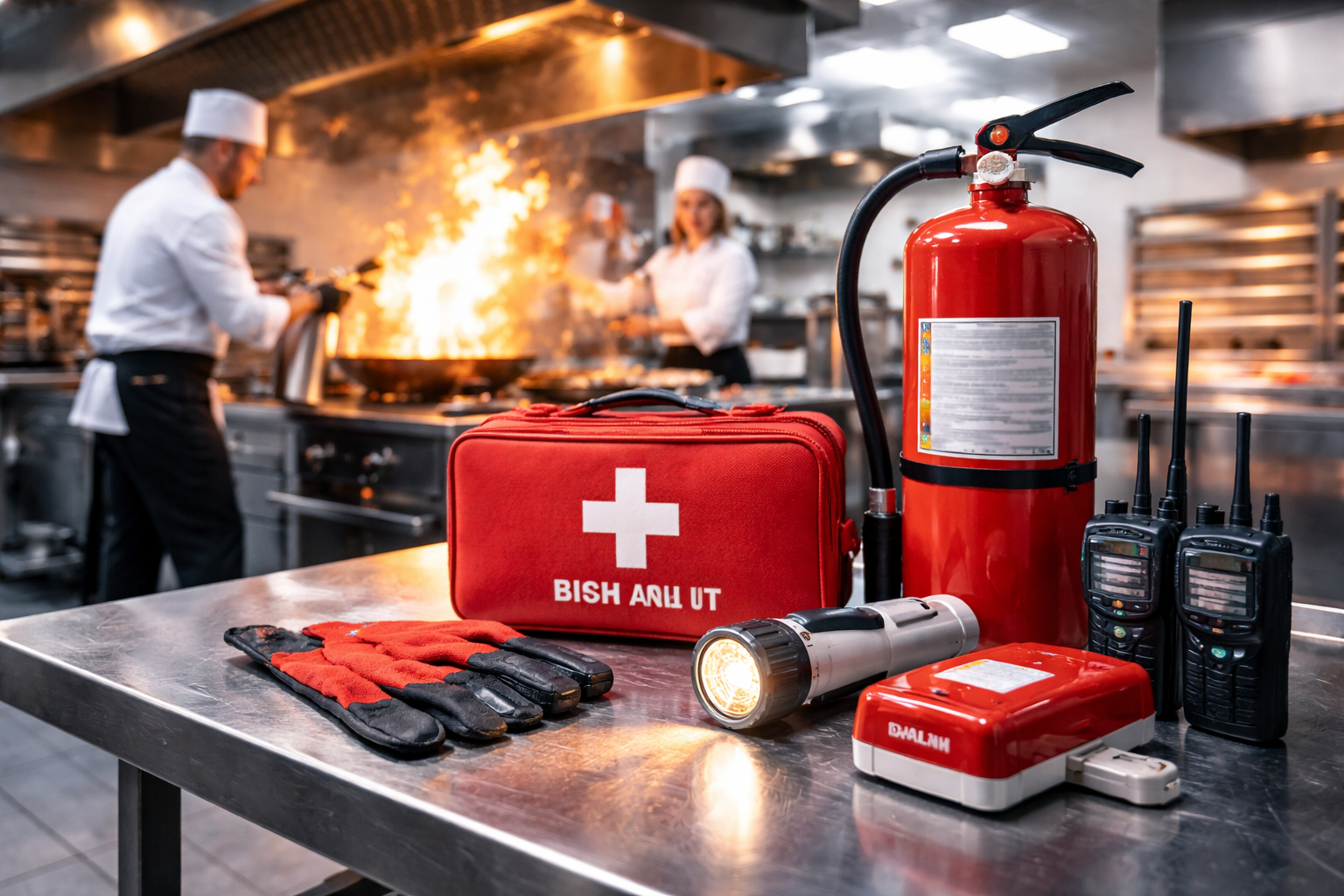
Professional kitchen settings demand efficient and accurate operations. Slight equipment problems or shifts in temperature may cause significant complications.
The consequences can be pretty serious because kitchen emergencies impact food safety and customer trust. So, you should definitely prepare for these incidents. A proper plan and reliable support systems are a must.
Keep reading and learn about some preparedness tips!
Detect Common Kitchen Accidents
An efficient kitchen goes beyond serving good meals. It should be ready for any unexpected events. Recognizing standard kitchen emergencies prepares your staff to handle these situations.
Here are some problems many commercial kitchens face.
Power Outages
A sudden power outage can halt your kitchen operations. Your essential equipment will stop working without electricity. It includes
- Refrigerators,
- Freezers,
- Ovens,
- POS systems,
- Ventilation units.
This situation can delay service and lead to product loss if outages last too long. Backup power options and clear procedures for preserving perishable items are critical.
Equipment Malfunctions
Equipment issues are also a systematic and expensive kitchen emergency. These malfunctions can delay the food preparation process. They also violate hygiene protocols and create potential safety threats for employees. Regular maintenance activities allow you to lower this risk.
Thermal Management Challenges
Safe food management depends on effective temperature control. Ignoring protocols can cause spoilage and expose you to compliance issues. Proper monitoring and storage procedures will help you avoid that.
Staff Deficit
Unplanned staff shortages during peak times are disruptive as well. Shortages increase stress on the remaining team and slow service. You can cross-train employees and plan an on-call staffing to maintain service quality.
Create a Response Plan for Food Storage Issues
Food storage problems are really serious as they can escalate quickly. They usually cause major safety issues and financial setbacks. A documented response plan guarantees your team knows how to manage refrigeration or freezer system issues.
You should assign some staff members to monitor and document storage conditions according to a schedule. Clear ownership will help you avoid confusion. You can also use digital thermometers or automatic monitoring devices.
Next, your plan should specify the procedures for managing food when storage temperatures are not safe. It should include instructions for transferring items to
- Backup refrigerators,
- Freezers,
- Cold storage units.
Plus, incorporate guidelines for labeling and safe disposal of compromised food.
Then, define specific time thresholds for action. Your response plan should also state when to contact emergency maintenance services or search for fridge repair near me to restore proper storage conditions.
This plan allows you to limit losses and maintain compliance even under pressure.
Build a Trusted Emergency Contact List
Every minute matters if something goes wrong in a commercial kitchen. So, you need a trusted emergency contact list. You should regularly update this list and share it with key staff members.
You can include reliable technicians for
- Refrigeration,
- Electrical systems,
- Plumbing,
- Ventilation,
- Cooking equipment.
Pre-vetted local service providers allow you to respond instantly to breakdowns.
Also, your emergency list should contain direct contact numbers for utility companies. You have to include outage reporting lines and emergency services.
Plus, you should account for any supply chain issues. Make sure to update contacts for main suppliers and backup vendors. It lets you make order adjustments and work smoothly.
Train Your Staff
Competent staff are essential for handling kitchen emergencies. They will resolve small issues before they turn into expensive breakdowns.
You should train your staff to notice and report even minor temperature changes. Teaching your employees how to read thermometers correctly and log temperatures helps maintain compliance and stops spoilage.
Make sure they recognize unfamiliar sounds that indicate mechanical problems. Also, your staff has to report any strange smells like
- Burning,
- Chemical odors,
- Sour food scents.
Plus, your employees should recognize uneven temperatures or excessive condensation. They need to acknowledge the potential dangers of continuing with malfunctioning equipment. Detecting problems in their initial stages allows the maintenance team to stop total failure.
Plan for Incidents Outside Regular Hours
Your equipment typically experiences more stress during busy service periods. So, problems may only surface after the kitchen shuts down. Power fluctuations and temperature issues can develop overnight, and you might not even notice them.
Your monitoring and response strategies should include coverage during off-hours. Make sure that your emergency contacts and service providers will respond at any time.
Also, you can't fix some emergencies right away. You have to prepare backup strategies for longer outages. These include
- Alternative cold storage,
- Temporary equipment rentals,
- Adjusted menus.
Proper procedures for food transfer and communication with suppliers will help you maintain control during longer disruptions.
Document Every Incident and Improve
Every kitchen emergency can offer you valuable lessons. So, you should document and review each incident.
You can start by recording a detailed account of the events, including
- Involved equipment,
- Timeline of events,
- Root cause of the failure.
Accurate records allow you to spot patterns and avoid similar problems in the future.
You can also examine some actual cases to adapt your response plans. If a procedure caused delays, revise it to be clearer and more practical. You have to update checklists and communication protocols to ensure your team can handle a similar situation next time.
Plus, post-incident reviews are your opportunity to evaluate vendor performance. Reliable service providers and suppliers who respond quickly and communicate properly are critical during emergencies.
You need to strengthen these relationships or replace underperforming partners. It will enhance response speed and effectiveness in future situations.
Conclusion
Preparing for emergencies in a commercial kitchen is more than the protection of appliances and physical infrastructure. It preserves food quality and helps you achieve uninterrupted business operations.
You need to understand the common emergencies you might face. Next, you can follow our tips to handle them. These include
- A response plan for food storage issues;
- Building an emergency contact list;
- Staff training;
- Preparation for after-hours incidents;
- Documentation and review.
Proper procedures and planning allow you to manage any problems easily.