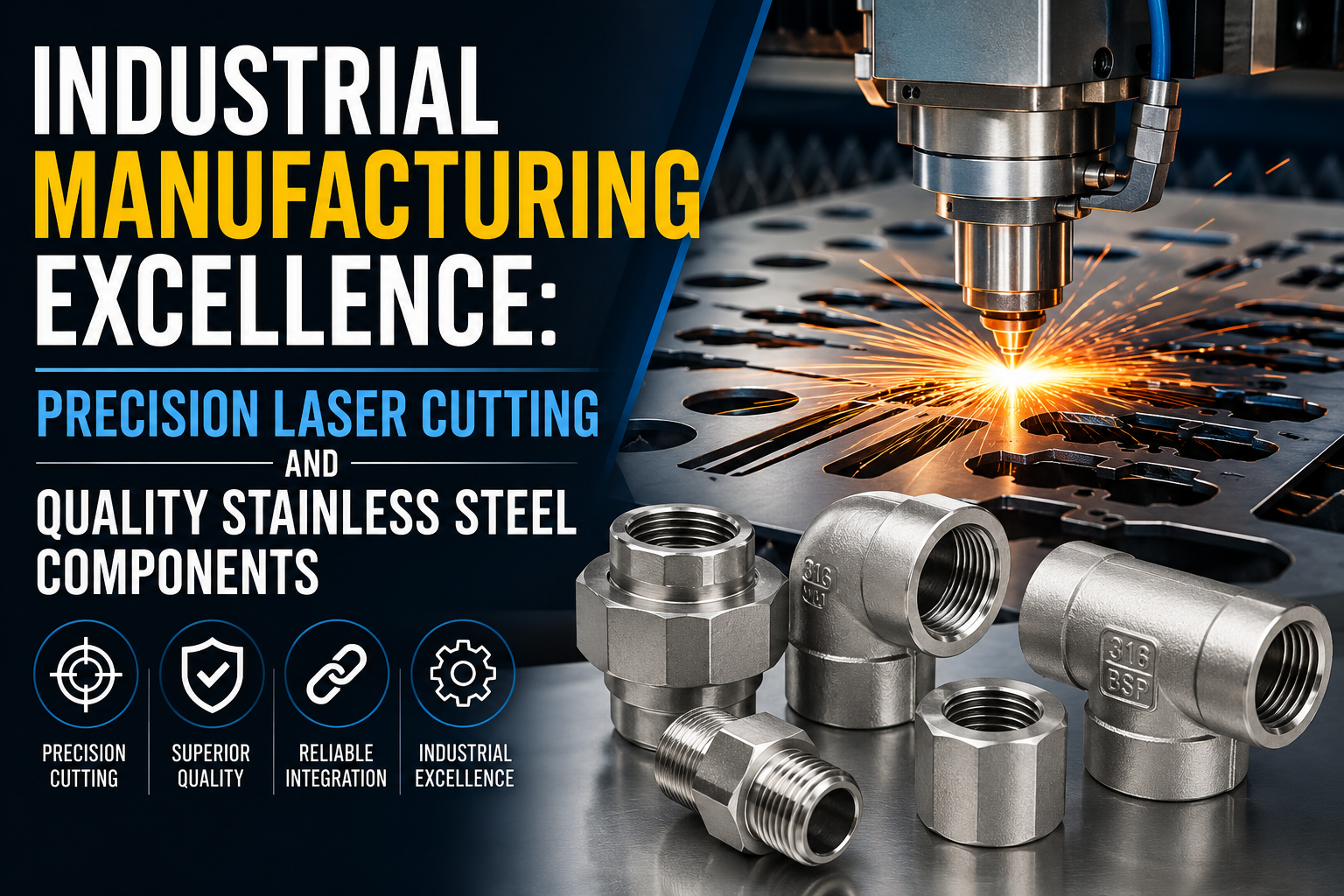
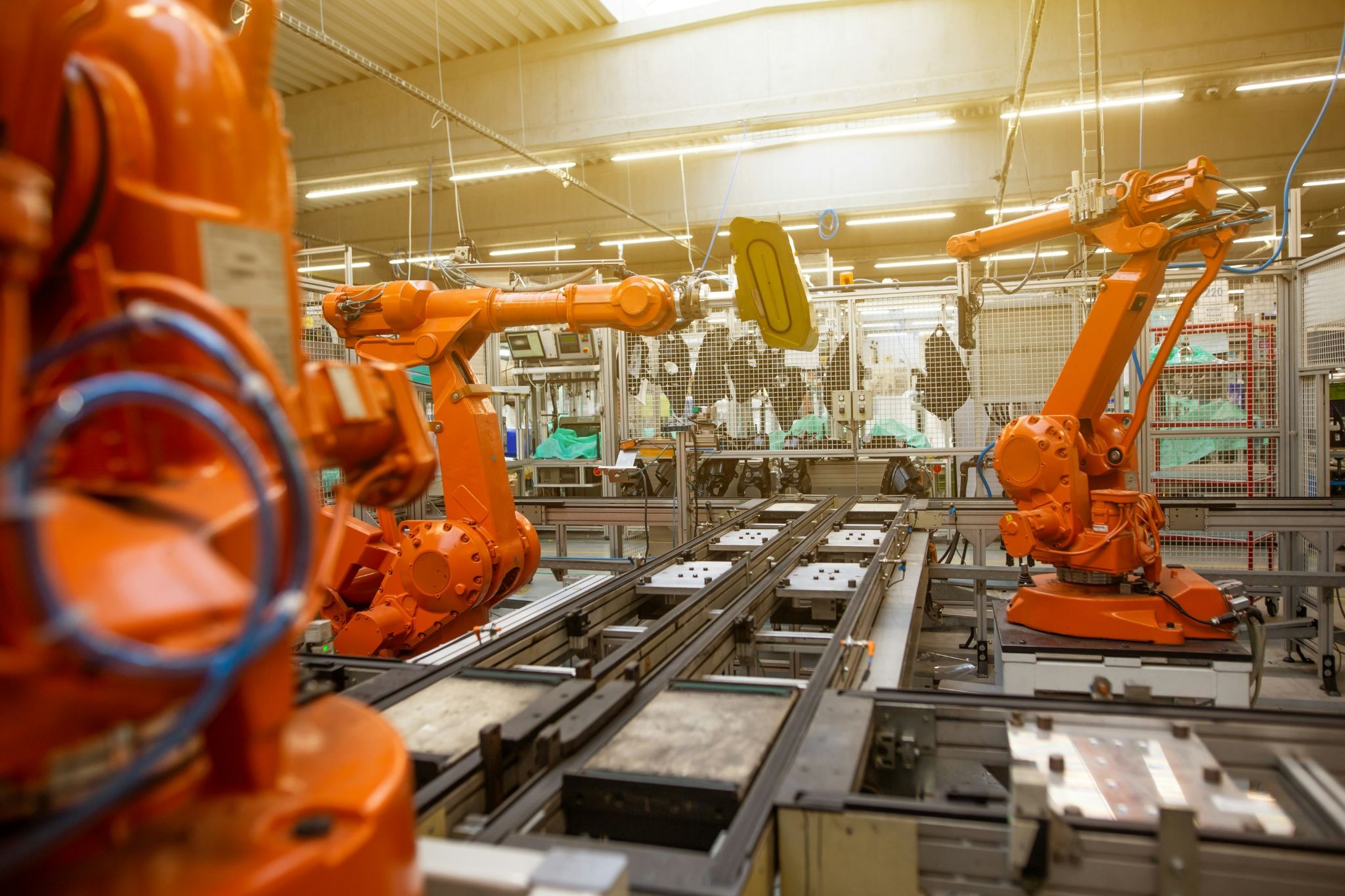
Modern manufacturing demands precision at every stage, from initial material processing to final component assembly.
Success in industrial production depends on partnering with suppliers who understand the critical relationship between accurate cutting and reliable component integration.
Key Takeaways
-
Precision laser cutting technology forms the foundation of quality industrial manufacturing, enabling manufacturers to achieve tight tolerances and complex geometries that drive modern production.
When combined with premium stainless steel components, laser-cut parts create systems designed for durability and long-term reliability across demanding applications. -
Australian manufacturers have access to world-class industrial capabilities including advanced fiber laser cutting systems and premium-grade stainless steel fittings that rival international standards.
Leveraging local expertise reduces lead times, lowers costs, and ensures components are optimized for local environmental conditions and industry regulations. -
The synergy between precision cutting and quality fittings eliminates weak points in industrial systems, creating integrated solutions that prevent failures and extend operational lifespan.
Manufacturers who coordinate these services achieve superior results compared to sourcing components from multiple isolated suppliers with disconnected quality standards. -
Technical specifications matter significantly when building reliable systems, requiring manufacturers to understand material properties, cutting capabilities, fitting tolerances, and assembly requirements as an interconnected ecosystem.
Partnering with suppliers who provide comprehensive technical guidance ensures every component selection supports overall system performance. -
Industrial systems built with precision-cut components and quality stainless steel fittings require minimal maintenance and support sustainable manufacturing practices by reducing waste and extending equipment lifespan.
This approach delivers superior return on investment while meeting environmental responsibility standards that modern businesses increasingly prioritize.
The Foundation of Modern Industrial Manufacturing
Industrial manufacturing has transformed dramatically over the past decade, driven by advances in automation, precision technology, and material science.
Every component in a modern system must meet exacting standards to ensure the entire assembly functions reliably under demanding conditions.
The relationship between precision manufacturing and system reliability cannot be overstated in today's competitive landscape.
When manufacturers invest in quality at every stage of production, they build systems that outperform competitors and earn customer loyalty through proven dependability.
Understanding Precision Laser Cutting in Modern Production
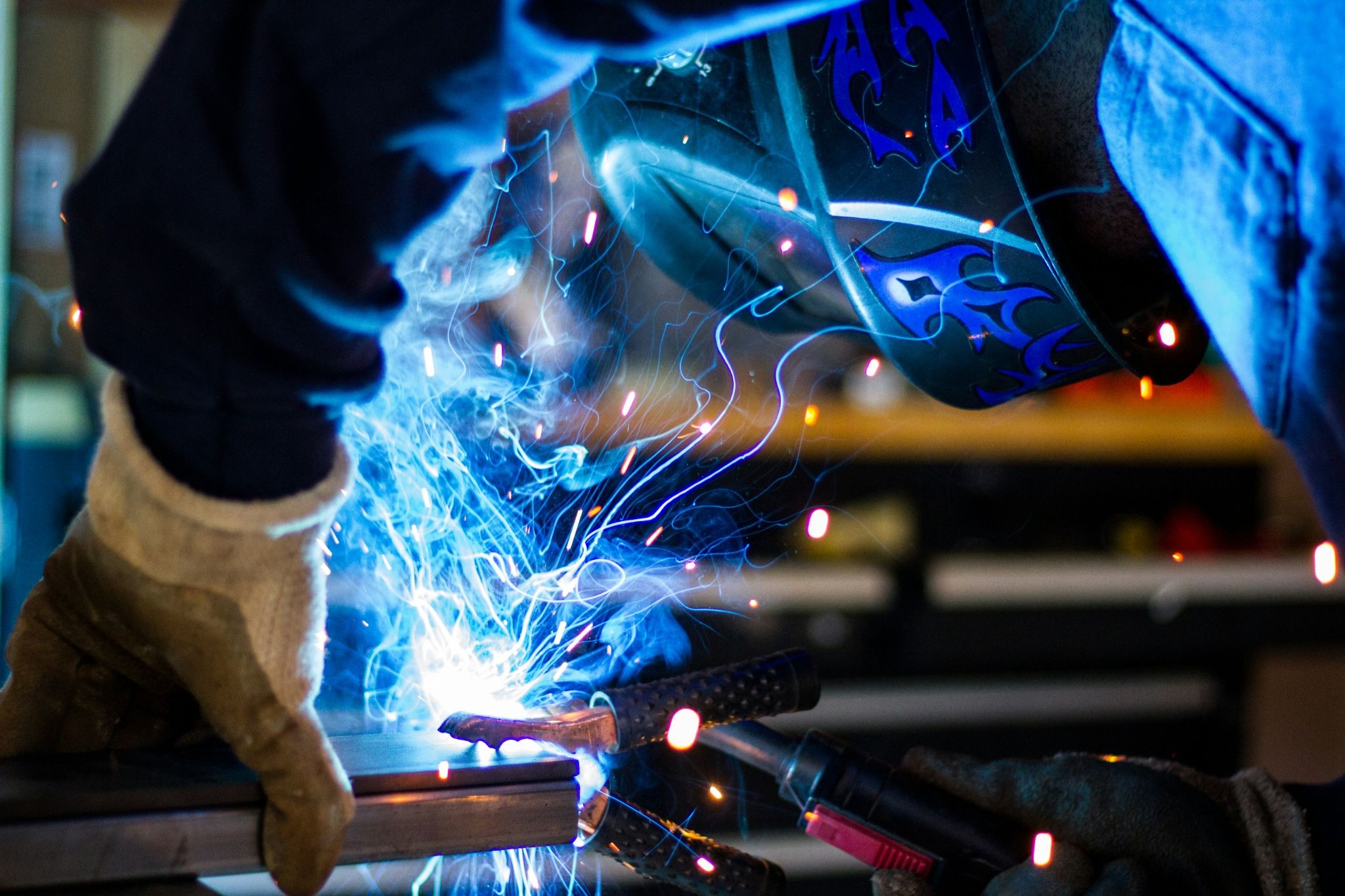
Precision laser cutting represents a quantum leap forward compared to traditional mechanical cutting methods.
Advanced fiber laser systems deliver cuts so precise that secondary finishing steps become unnecessary, dramatically reducing production time and waste.
Laser cutting technology excels at handling complex geometries that would be impossible to achieve through conventional means.
Whether cutting intricate patterns in sheet metal or creating specific profiles in tubes, modern laser systems transform design intentions directly into physical components with unmatched accuracy.
The advantages extend beyond mere precision to encompass material efficiency and production speed.
Laser systems minimize material waste through optimized nesting algorithms that pack components intelligently onto raw stock, reducing raw material consumption and lowering overall project costs.
Different applications require different cutting approaches, and experienced laser cutting providers understand how to optimize processing parameters for specific materials and thicknesses.
For example, cutting stainless steel requires different settings than cutting aluminum or brass, ensuring each material receives the processing it needs to achieve optimal results.
Queensland-based manufacturers have access to state-of-the-art laser cutting facilities equipped with the latest Bystronic fiber technology.
This industrial laser cutting capability enables companies throughout Australia to access precision services that previously required shipping components interstate or internationally, dramatically reducing turnaround times.
The precision achieved through modern laser cutting creates components that fit together seamlessly with other industrial parts.
When laser-cut components meet quality stainless steel fittings designed with exacting tolerances, the result is an integrated system where every piece works in perfect harmony.
Building Reliable Systems with Quality Stainless Steel Components
Stainless steel has become the material of choice for industrial applications where durability and corrosion resistance are non-negotiable requirements.
Grade 316 stainless steel, in particular, offers superior resistance to corrosion in harsh environments while maintaining its strength across wide temperature ranges.
Quality stainless steel fittings serve as the connecting tissue in industrial piping and assembly systems.
These components must maintain precise tolerances to create reliable seals and secure connections that prevent leaks and system failures that could disrupt operations or create safety hazards.
The diversity of available fitting types reflects the complexity of modern industrial systems. From BSP threaded connections to compression fittings, camlock couplings, and tri-clamp ferrules, each type serves specific applications and design requirements.
Selecting appropriate fittings requires understanding system pressure requirements, material compatibility, and operational conditions.
Quality fittings eliminate weak points that could compromise system integrity during operation. When paired with precision-cut components that fit perfectly within designed specifications, quality fittings ensure the entire assembly functions reliably for years without unexpected failures.
Australian manufacturers can source quality bsp fittings Australia from suppliers maintaining rigorous quality standards and extensive local stock for rapid delivery.
Local availability eliminates long lead times associated with international sourcing while ensuring products are optimized for Australian environmental conditions and industry standards.
The relationship between component precision and fitting performance illustrates why manufacturers should coordinate their sourcing across related capabilities.
When precision-cut parts meet quality fittings designed for perfect integration, the result exceeds what either could achieve independently.
Material selection becomes critical when building systems designed for specific environmental conditions.
Stainless steel's natural resistance to corrosion makes it ideal for systems exposed to moisture, chemicals, or varying temperatures that would quickly degrade lesser materials.
Understanding thread types and connection standards prevents costly integration errors that could delay projects or require expensive rework.
Different applications require different threading standards, and experienced suppliers can guide manufacturers toward appropriate choices for their specific needs.
The relationship between component precision and fitting performance illustrates why manufacturers should coordinate their sourcing across related capabilities.
When precision-cut parts meet quality fittings designed for perfect integration, the result exceeds what either could achieve independently.
The Synergy of Precision Cutting and Quality Components
Truly exceptional industrial systems emerge when precision-cut components work seamlessly with quality stainless steel fittings.
This synergy eliminates the gaps and compromises that occur when components are sourced from disconnected suppliers without coordination.
Coordinated sourcing reduces compatibility issues that plague systems assembled from components designed in isolation.
When cutting specifications align with fitting tolerances, and both are optimized for the intended application, the entire assembly performs at peak efficiency.
Lead times decrease dramatically when manufacturers partner with integrated suppliers who understand both cutting requirements and component specifications.
Rather than waiting for separately sourced components to arrive and then discovering compatibility issues, coordinated sourcing delivers components that assemble perfectly on the first attempt.
Quality consistency improves significantly when components originate from suppliers maintaining synchronized quality standards.
Systems built from parts manufactured to consistent specifications perform reliably and predictably, reducing unexpected failures and emergency maintenance costs.
Cost efficiency improves through material optimization and reduced waste across the entire production process.
When precision cutting minimizes material waste and quality components prevent system failures, total cost of ownership decreases dramatically despite potentially higher initial component costs.
Choosing Suppliers for Integrated Manufacturing Excellence
Selecting manufacturing partners should involve evaluating their capabilities across the full spectrum of required services.
Suppliers who understand both precision cutting requirements and component specifications offer significantly greater value than single-service providers who focus on only one aspect of production.
Technical expertise becomes essential when navigating the complex relationships between cutting parameters, material properties, and component integration.
Experienced suppliers can guide manufacturers toward optimal choices that balance cost, performance, and timeline requirements while ensuring every aspect aligns with your overall manufacturing strategy.
Modern industrial laser cutting providers combine technical knowledge with state-of-the-art equipment to deliver solutions that traditional cutting methods cannot match.
When selecting a laser cutting partner, verify their equipment specifications, certifications, and capacity to handle your specific material and thickness requirements.
Local partnerships offer advantages that extend beyond convenience to include rapid response times and personalized technical support.
Australian manufacturers benefit from working with local suppliers who understand regional requirements and can provide immediate assistance when questions arise.
Quality certifications and standards compliance demonstrate supplier commitment to excellence and assure that components meet or exceed industry requirements.
ISO certifications, material test reports, and documented quality control processes provide confidence in component reliability.
Building long-term relationships with quality suppliers creates advantages that accumulate over time.
As suppliers become more familiar with your specific requirements and preferences, they can optimize their services and offer increasingly valuable suggestions for process improvements.
Conclusion
Industrial manufacturing excellence requires precision at every step, from initial material cutting through final component assembly.
Manufacturers who invest in quality laser cutting services and premium stainless steel fittings build systems that deliver superior reliability and cost performance.
Australian businesses have access to world-class manufacturing capabilities without requiring expensive international sourcing.
By partnering with local suppliers who maintain rigorous quality standards and possess advanced technical capabilities, manufacturers can build industrial systems that outperform competitors and earn lasting customer loyalty through proven dependability.
Frequently Asked Questions
What types of materials can precision laser cutting handle?
Modern fiber laser systems can cut virtually any metal, including mild steel, stainless steel, aluminum, brass, and copper, with precision.
The cutting parameters are adjusted based on material properties to achieve optimal results for each specific material.
How do I know if stainless steel fittings are compatible with my specific application?
Compatibility depends on multiple factors including threading standards (BSP versus NPT), pressure ratings, temperature requirements, and chemical exposure conditions.
Consult with experienced suppliers who can assess your specific application and recommend appropriate fitting types.
What lead times should I expect for laser cutting services?
Lead times vary based on project complexity, current order volume, and material availability. Experienced laser cutting providers can typically deliver standard projects within 1-2 weeks, with expedited options available for urgent requirements.
Why should I choose local Australian suppliers over international options?
Local suppliers offer shorter lead times, faster shipping, personalized technical support, and familiarity with Australian industry standards and environmental requirements.
Building relationships with local suppliers also supports Australian manufacturing and strengthens supply chain resilience.
How can I optimize my designs for laser cutting?
Work with experienced laser-cutting professionals who can review your designs and suggest modifications to improve cutting efficiency while maintaining functionality.
Design optimization can reduce waste, improve tolerances, and decrease costs compared to designs created without manufacturing input.
What maintenance do stainless steel fitting systems require?
Systems built with quality stainless steel fittings and precision-cut components typically require minimal maintenance beyond visual inspection for leaks or damage.
Stainless steel naturally resists corrosion, ensuring long service life with minimal upkeep.
Can laser cutting services provide secondary finishing operations?
Many advanced laser cutting facilities offer additional services including deburring, surface treatments, and assembly.
Ask your laser-cutting provider about secondary services that could further streamline your production process.