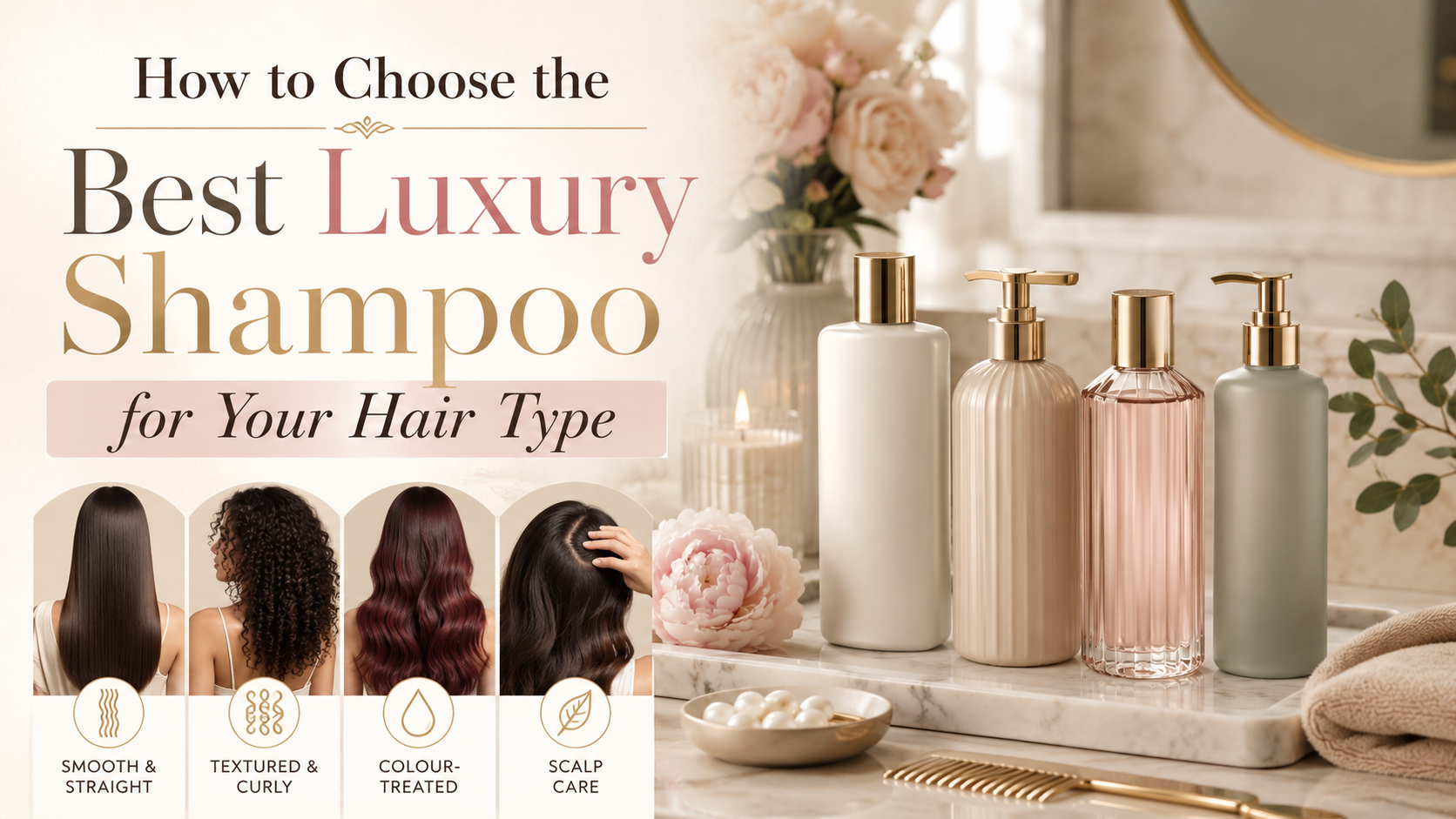
Haircare shelves and beauty websites can feel crowded. Volumising, replenishing, colour-safe, clarifying and scalp care labels often blur together.
The best choice starts with a few simple questions about your scalp, hair texture, colour routine and how often you wash.
This guide uses plain language and dermatology-informed tips to help you match a premium shampoo to your needs, whether you shop online or in store.
Start With Your Scalp, Not Your Ends
Shampoo is mostly a scalp product. The Cleveland Clinic notes that shampoo should be worked into the scalp, while conditioner is best focused on the ends.
Your scalp produces oil and sheds skin cells, so that is where cleansing matters most. The lengths of your hair usually need moisture and slip rather than a heavy cleanse.
Wash frequency depends on hair type. The American Academy of Dermatology suggests daily washing can suit straight, oily hair, while dry, textured or curly hair can be washed as needed, but at least every two to three weeks.
Try a quick self-check. Are your roots oily by the afternoon? Do you see flakes? Is your colour fading faster than you would like? Your answers point toward the right formula.
Match Your Hair and Scalp Type to a Shampoo Type
Once you know your scalp behaviour, it becomes easier to compare products. These common hair concerns can help narrow your options.

Oily Scalp or Fine Hair
-
Choose lightweight, volumising, or balancing formulas.
-
Use an occasional clarifying wash if styling products build up.
-
Keep heavy oils and rich masks away from the roots so hair does not fall flat.
Dry, Damaged, or Coarse Hair
-
Look for moisturising or replenishing formulas.
-
Low-sulphate or sulphate-free options may feel gentler.
-
Wash less often if frequent cleansing leaves your hair rough or dull.
Curly or Coily Hair
-
Reach for hydrating shampoos that support moisture.
-
Wash at least every two to three weeks, as the AAD advises.
-
Condition through the lengths and detangle gently in the shower.
Colour-Treated Hair
-
Pick colour-safe, gentle formulas.
-
Use purple or blue toning shampoo as directed, often once or twice a week, to avoid over-toning.
-
Avoid frequent clarifying washes, which can make colour fade faster.
Flakes or Dandruff
-
Look for anti-dandruff active ingredients on the label.
-
The AAD suggests applying anti-dandruff shampoo to the scalp and leaving it on for two to 10 minutes before rinsing.
-
Follow with conditioner on the lengths so they do not dry out.
If flaking, itching or irritation persists, seek professional advice instead of switching products repeatedly.
Where to Shop Luxury Formulas
If you want to compare formulas for strength, moisture, scalp care and colour care, you can browse Oribe shampoo and filter by need. Oribe organises products around common concerns, which can make the first shortlist simpler.
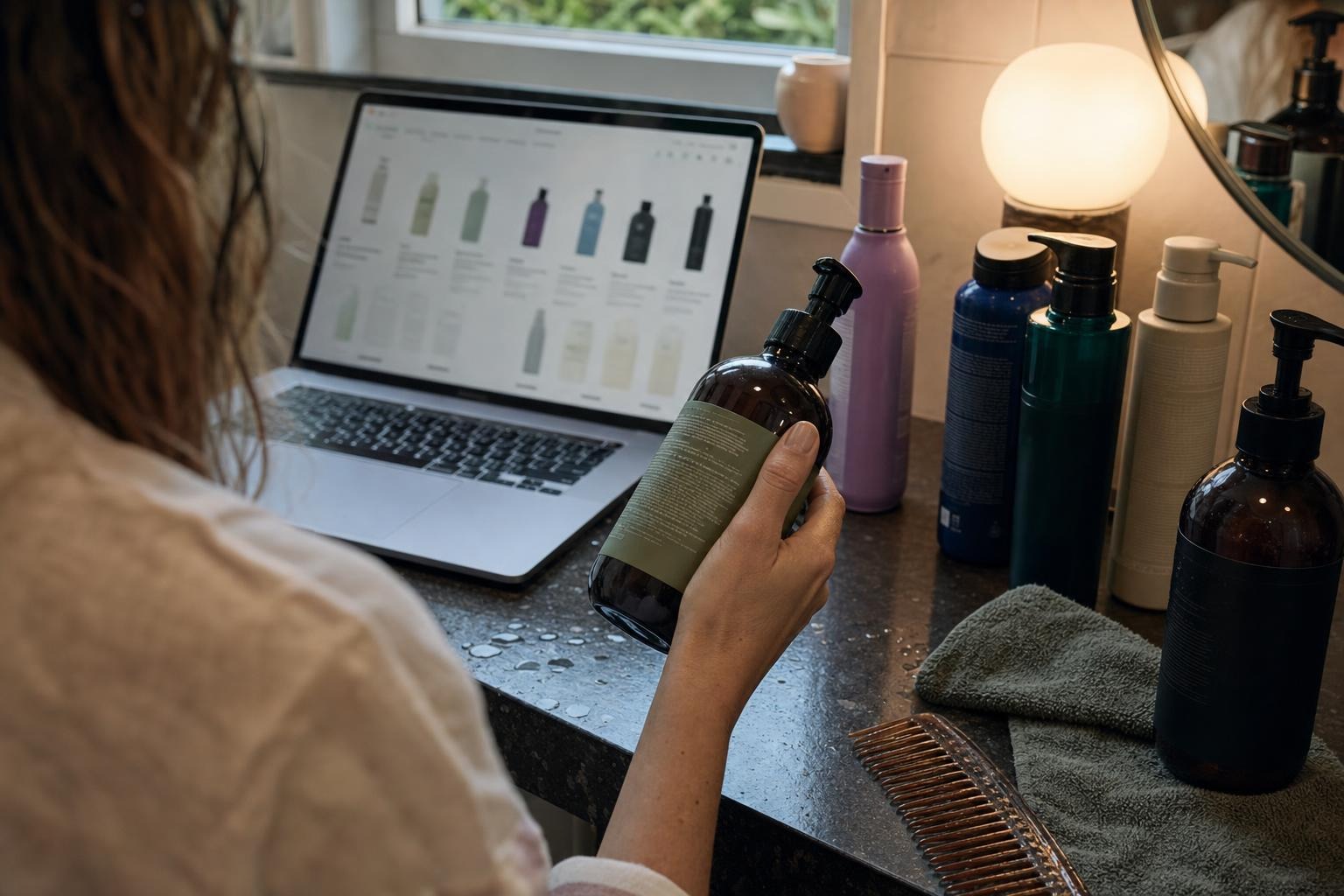
How to Read Beauty E-commerce Product Pages
Product pages often include more useful detail than the headline. Reading them closely helps you avoid buying a formula that does not suit your hair.
-
Check the ingredient list. In Australia, cosmetic ingredient information must be available at the point of sale and listed on the container or product.
-
Read the usage directions, especially leave-on times for anti-dandruff or toning shampoos.
-
Match the main claim to your need, such as volumising for fine hair or moisturising for dry hair.
-
Be cautious with very broad promises. Patch test first if your skin is sensitive.
The ACCC notes that missing or inaccurate ingredient labelling can expose consumers to allergens, so a clear list matters.
In Australia, AICIS regulates the import and manufacture of chemicals used in cosmetics, and shampoo falls within the cosmetics category.
Most shampoos are largely water, so the supporting ingredients and usage directions tell you more than the size of the bottle or the boldest claim on the page.
Build a Simple Routine
A workable routine is better than a complicated one. Start with a wash frequency that suits your scalp, then adjust as your hair changes.
|
Hair type |
Suggested wash frequency |
|---|---|
|
Thin or fine |
Every one to two days |
|
Coarse or thick |
Around weekly |
|
Curly or coily |
At least every two to three weeks |
These cues draw on guidance from the Cleveland Clinic and the AAD. Your scalp should still guide the final schedule.
Use clarifying shampoo sparingly, at most once or twice a week, since it can be drying. Purple or blue toning shampoos also usually work best once or twice a week.
Dry shampoo can help between washes, but the AAD is clear that it does not clean hair and should not replace washing with shampoo and water.
A simple three-step wash works for most people. Wet the hair thoroughly, work shampoo into the scalp, then apply conditioner to the lengths.
If you would like professional advice or a treatment, local hairdressers can assess your scalp and suggest a routine suited to your hair.
A Quick Note on Product Recalls
Recall notices are usually limited to specific lots, sizes and regions. For example, the June and July 2026 notice for Oribe Serene Scalp Densifying Shampoo applied to select lots in the U.S. and Canada, not every Oribe formula.
If you see a notice for an Oribe product you own, check the lot code on the packaging against the official notice. Do not assume the same warning applies to other Oribe products unless the notice says so.