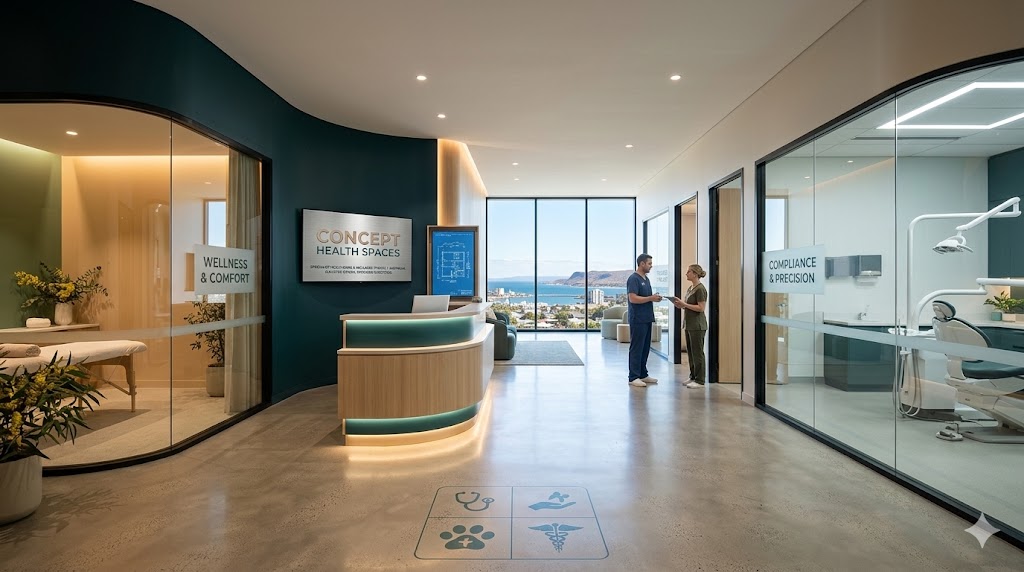
Designing and building a healthcare environment is a different challenge to delivering a standard commercial interior. It requires technical construction capability, regulatory awareness, and a clear understanding of how healthcare and wellness spaces operate in real life. Concept Health Spaces positions itself squarely within that specialist sector across Australia.
They work across medical centres, dental practices, veterinary facilities, allied health environments, and wellness spaces. That breadth matters because each of these environments carries different functional demands and brand expectations.
Portfolio and Built Quality
Across their completed projects, there is a consistent balance between operational performance and visual refinement. Clinical spaces are clearly planned around equipment integration and staff movement, but they are also finished to a professional standard that reflects modern healthcare expectations. Reception areas feel deliberate and brand-aligned rather than generic.
The layouts do not appear forced or squeezed to maximise floor area. Rooms are proportioned realistically, and circulation paths are clearly considered. Back-of-house zones support efficiency without disrupting the overall presentation of the space. The result is environments that feel cohesive rather than segmented into “functional” and “designed” zones.
Patient Experience and Comfort
Healthcare environments shape perception immediately. Lighting, spacing, privacy, and acoustics all influence how patients feel on arrival.
In their projects, waiting areas are integrated into the overall flow rather than feeling isolated. Consultation rooms offer appropriate privacy while remaining open and usable. Finishes and colour palettes support professionalism without creating a cold atmosphere. There is an evident awareness that patient comfort is part of operational success, not an afterthought.
Workflow and Operational Flow
A healthcare space must function efficiently under pressure. Patient foot traffic, staff circulation, sterilisation routes, and storage placement all affect daily performance.
Their projects suggest deliberate zoning between public, clinical, and staff-only areas. Equipment and storage appear integrated into the layout rather than retrofitted. Circulation paths minimise cross-traffic, which improves efficiency and privacy. These decisions directly support appointment turnover and operational consistency.
Compliance and Regulatory Awareness
Healthcare and veterinary facilities in Australia operate within strict regulatory frameworks, including building codes, accessibility standards, and infection control requirements. Delays in approvals can have financial consequences.
The materials, spatial separation, and construction standards reflected in their work indicate familiarity with these compliance demands. That regulatory awareness reduces risk during council approvals and inspection stages.
Delivery Model and Budget Control
Operating under a design-and-construct model, Concept Health Spaces manages projects from early planning through to completion. A single accountable team overseeing design and build provides clearer communication and scope alignment before construction begins.
Healthcare fitouts require significant capital investment, and disciplined planning reduces exposure to cost escalation. An integrated delivery structure helps maintain oversight across timeline, budget, and execution.
Overall Assessment
Concept Health Spaces operates as a specialist healthcare and wellness fitout provider combining strong construction capability with sector-specific experience. Their portfolio reflects attention to compliance, workflow, patient experience, and finish quality. For operators seeking a regulated, efficient, and professionally executed healthcare or wellness environment, they represent a credible and experienced option within the Australian market.