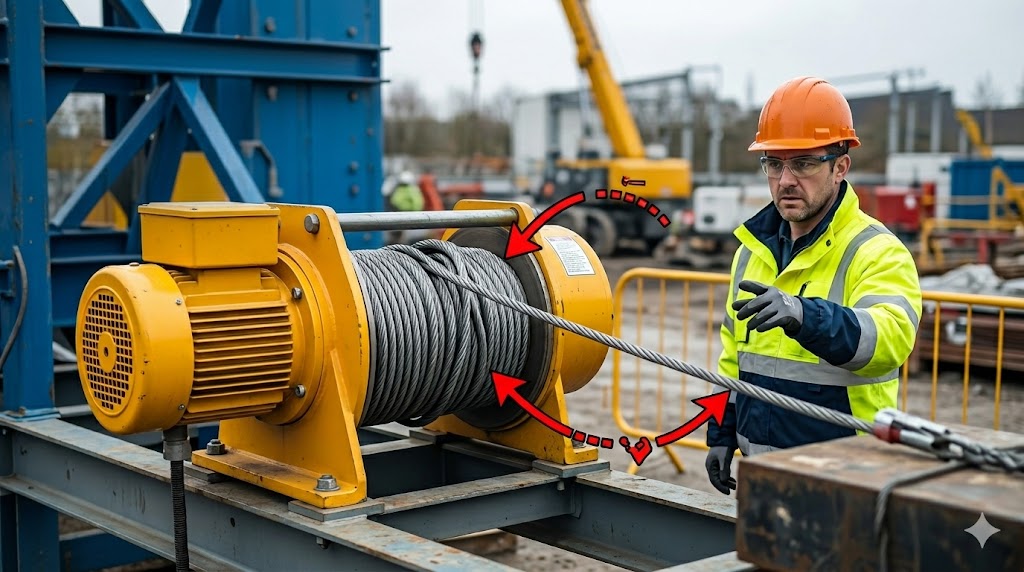
Winches are powerful, versatile tools used across construction sites, workshops, warehouses, recovery operations and industrial settings. When operated correctly, they improve efficiency, reduce manual handling risks and make heavy lifting or pulling tasks far safer. When operated incorrectly though, they can become one of the most dangerous pieces of equipment on site.
The experts at I&M Solutionshave seen firsthand how small oversights in winch operation can lead to damaged equipment, costly downtime and, in worst-case scenarios, serious injury. Whether you’re using an electric winch, hydraulic winch or manual unit, understanding the most common mistakes is essential for maintaining both safety and performance.
Here are the key winch operation mistakes to avoid at all costs (…and what to do instead).
Ignoring Load Ratings
One of the most common and dangerous mistakes is exceeding the winch’s rated capacity. Every winch is designed with a maximum working load limit (WLL). This rating takes into account the strength of the motor, gears, drum and cable. Exceeding it can result in:
- Cable failure
- Motor burnout
- Structural damage
- Sudden load drop
It’s also important to remember that rated capacity often decreases as more cable is spooled onto the drum. The first wrap has the highest pulling capacity. As layers build up, effective pulling power reduces.
Best practice:Always confirm the load weight, factor in resistance (inclines, friction, suction, etc.), and operate well within the winch’s rated limits.
Poor Cable Spooling
Improper cable spooling may seem minor, but it can cause major issues over time. Common spooling mistakes include allowing the cable to bunch up on one side of the drum, overlapping wraps unevenly, or letting the cable go slack during operation. Poor spooling creates pressure points and weak spots, which significantly increase the risk of cable crushing or failure under load.
Best practice:Maintain tension while spooling and guide the cable evenly across the drum. Regularly inspect for kinks, flattening or fraying.
Standing within the Line of Pull
This is a serious safety breach that unfortunately still occurs on many sites. Standing in direct alignment with a tensioned cable exposes operators and bystanders to severe injury if the line snaps. The stored energy in a loaded winch cable can cause it to recoil violently.
Best practice:
- Never stand in the line of pull.
- Keep all personnel well clear of the cable path.
- Use rated dampeners where appropriate.
Treat a tensioned winch cable with the same respect you would any high-energy system.
Using Damaged or Incompatible Accessories
Winch performance relies on the integrity of all connected components, including shackles, hooks, slings, fairleads and mounting brackets. Using accessories that are not load-rated for the task – or continuing to operate with worn or damaged components – creates weak links in the system.
Best practice:Inspect all hardware before use and ensure every component is appropriately rated and compatible with the winch system.
Poor Anchor Point Selection
A winch is only as strong as its anchor point. Attaching to unstable structures, undersized mounting surfaces or unverified load-bearing points can lead to catastrophic failure. In recovery scenarios, choosing a weak tree or damaged structure as an anchor point is a common mistake.
Best practice:Confirm that anchor points are structurally sound and rated for the required load. When in doubt, reassess before applying tension.
Operating Without Proper Training
Winches may look straightforward, but they are not “plug-and-play” tools. Untrained operators may:
- Misjudge load dynamics
- Ignore tension changes
- Fail to recognise early warning signs of strain
- React incorrectly during unexpected movement
Proper training reduces the likelihood of panic responses and poor decision-making under pressure.
Best practice:Ensure all operators are trained in correct procedures, load calculations and emergency response protocols.
Neglecting Routine Maintenance
Even the highest-quality winch requires ongoing maintenance. Common maintenance oversights include:
- Failing to lubricate moving parts
- Ignoring unusual noises
- Skipping cable inspections
- Overlooking electrical connection wear
Mechanical failure rarely happens “out of nowhere”. There are almost always early signs that something is wrong.
Best practice:Implement a structured inspection and maintenance schedule. Address minor issues before they become major failures.
Sudden Shock Loading
Shock loading occurs when a load is jerked or subjected to sudden force rather than being tensioned gradually. This can happen when accelerating too quickly, snatching a load, or allowing slack to develop before reapplying tension. Shock loading significantly multiplies stress on both the winch and the cable.
Best practice:Apply steady, controlled tension. Avoid sudden starts or abrupt changes in direction.
Failing to Consider Environmental Conditions
Environmental factors can dramatically impact winch operation.
- Wet conditions can reduce braking performance
- Dust and debris can infiltrate mechanical components
- Extreme heat can strain motors
- Corrosive environments can weaken cables and fittings
Ignoring these factors increases wear and compromises safety.
Best practice:Select equipment suited to your operating environment and adjust procedures accordingly.
Winches are invaluable tools across a wide range of industries, but their power demands respect
Most winch-related incidents stem not from equipment defects, but from preventable operational mistakes. By understanding and avoiding these common errors, you reduce the risk of injury, protect your equipment investment and maintain site productivity.
Safe winch operation comes down to three fundamentals:
- Know your load
- Respect your limits
- Maintain your equipment
When those principles are followed consistently, winches remain what they are designed to be – reliable, controlled and efficient lifting and pulling solutions.