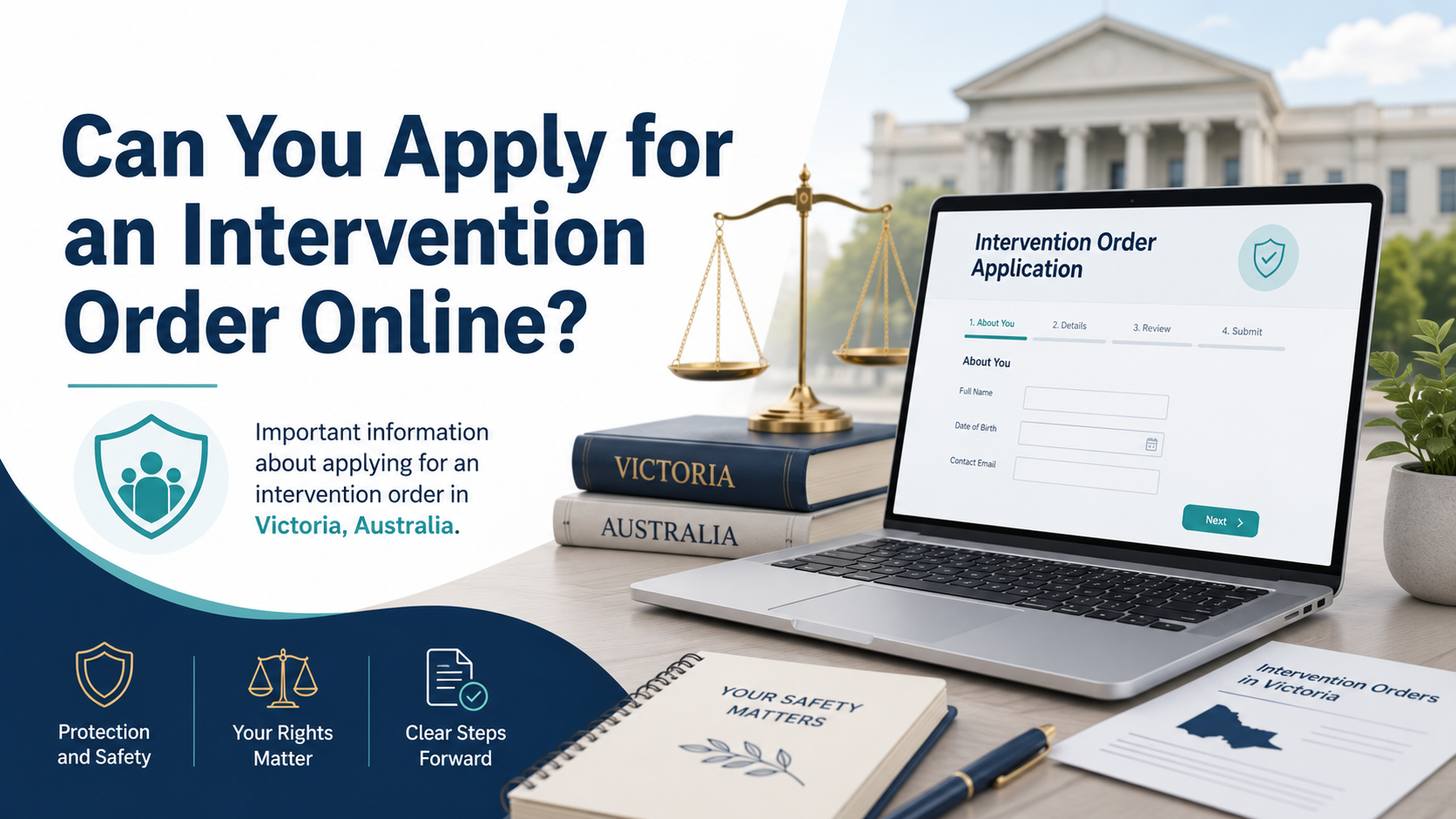
When you feel unsafe, even starting the court process can feel like a lot. You may be worried about seeing the other person, writing down private details, choosing the wrong form, or leaving out something important. For many people, being able to begin the process online can make that first step feel a little less confronting.
If your search started with “apply for intervention order online”, it helps to know that the process in Victoria depends on the type of order you need. A family violence intervention order application can be started online. A personal safety intervention order follows a different process and uses the correct PSIO form, supported by a declaration of truth or affidavit.
Work Out Which Order Fits the Situation
The first thing to look at is your relationship with the other person.
If the person is a family member, partner, former partner, or someone connected to you through a family-type relationship, the matter may fall under a family violence intervention order.
If the person is not a family member, the matter may involve a personal safety intervention order. That could include a neighbour, co-worker, housemate, acquaintance, former friend, or someone accused of stalking, harassment, threats, physical harm, mental harm, or serious intimidation.
This distinction matters because the forms and processes are not the same.
Call 000 if There Is Immediate Danger
An online application is not the right step in an emergency. If you are in immediate danger, or you believe violence may happen soon, call triple zero.
Police can take urgent action where needed. In family violence situations, they may also apply for protection in some circumstances. If there are weapons, recent violence, threats, children at risk, or someone waiting nearby, deal with safety first and paperwork later.
Get the Basic Details Together
Before you start, gather what you can. That might include the other person’s full name, date of birth if you know it, address if known, your contact details, children’s details if they are involved, police event numbers, screenshots, photos, and dates of key incidents.
You do not need to sound like a lawyer. In fact, it is better if you do not try to. Plain, specific details are more useful than dramatic language. If there has been a pattern, write the incidents in order so the court can follow what has been happening.
For example, rather than writing “they keep harassing me”, explain what they did. Did they call repeatedly? Turn up at your home? Send threatening messages? Follow you? Contact your workplace? Those details help show why protection is being requested.
Write It Clearly and Carefully
The court may read your application, and the respondent may receive a copy. That does not mean you should hold back important information, but it does mean the wording should be careful.
Stick to what happened, when it happened, where it happened, who was involved, and why you are asking for protection. Avoid insults, guesses about motives, or broad claims without examples.
Specific examples are usually stronger than general statements. A clear sentence about three unwanted visits is more useful than a long paragraph saying someone has made your life unbearable. Keep the focus on behaviour, risk, and the protection you need.
Starting Online Does Not Mean Everything Happens Online
It is worth knowing this early: starting the process online does not always mean the whole matter will stay online.
You may still need to attend court, either in person or by video link. You may need to answer questions, provide more information, or attend another hearing later. The court may deal with interim protection first and make a final decision at a later date, especially if the respondent contests the order.
Keep copies of anything you submit. Write down court dates, reference numbers, and any instructions you receive. When you are stressed, small details are easy to forget.
Get Advice if Things Are Complicated
Some applications are more straightforward than others. You should consider getting advice if the situation involves children, parenting orders, firearms, shared housing, property, criminal charges, workplace issues, disability support needs, or uncertainty about which type of order applies.
Advice can help you choose the correct process and ask for conditions that actually work. For example, if you need protection but still have to manage school pick-ups, shared property, or communication about children, the wording of the order matters.
Final Thoughts: Prepare Before You Apply
Applying online can make the first step easier, especially when you feel overwhelmed or unsafe. But it still helps to slow down before you submit anything.
Work out which type of order applies. Collect the key details. Use clear examples. Keep your wording factual. Call the police if there is immediate danger.
A careful application can make the next stage less confusing and help the court understand what protection is needed from the start.