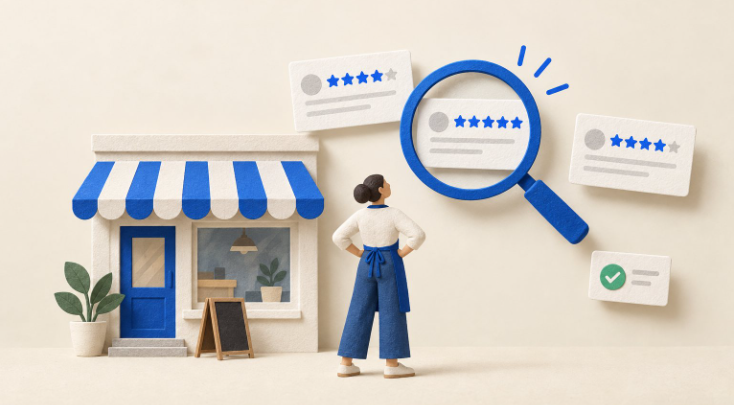
You find out about the bad review at 4 p.m. From a regular customer who says, "hey, did you see what someone wrote about you?" You didn't. It's been up for three days, a competitor's employee liked it, and two more people have echoed the same complaint in the comments since.
Online review monitoring is the habit of checking every platform where customers can rate your business, on a set schedule, before someone else has to tell you what's on it. It matters because a review sitting unanswered for days doesn't just sit there. It gets read, shared, and sometimes repeated by the next unhappy customer who saw it first.
This post walks through what monitoring means for a local business, the signs you've outgrown occasional checks, which platforms to cover, a weekly routine you can start this week, the mistakes that let reviews slip through, and how the approach changes once you're managing multiple locations or client accounts.
What online review monitoring means for a local business

Online review monitoring means tracking new reviews, ratings, and mentions across every platform where customers can rate your business. That includes Google Business Profile, Yelp, Facebook, and niche sites like Healthgrades for medical practices or Zillow for real estate agents.
It's different from the way most small businesses handle reviews today, which is reacting only after a customer or employee flags one. That approach means you're always finding out last, and always starting from behind.
For a single location, monitoring can be as simple as one person checking three sites once a week. For a multi-location brand, it means checking dozens of profiles across cities, which is a different job entirely.
The goal either way is the same: catch one negative review fast, before it becomes the thing three other customers repeat back to you in their own reviews.
Signs your business needs a monitoring routine, not just occasional checks
Occasional checking works until it doesn't, and the shift usually happens quietly. Here are the signs that tell you it's time for an actual routine.
-
You hear about bad reviews secondhand. A customer, an employee, or a friend mentions a review before you've seen it yourself.
-
Customers can review you in more than one place. If people leave feedback on Google, Facebook, and a niche directory, checking only one creates a blind spot for the others.
-
You have more than one location. No single owner can eyeball every profile for every site, every week, without a plan.
-
Replies are going out late. If it's been a week or more since you responded to a review, customers reading it now see a business that doesn't pay attention.
-
Nobody tracks the average rating over time. A slow drop, say from 4.8 to 4.6, is easy to miss review by review but obvious once you're watching the monthly number.
None of these require expensive software on day one. What they require is a set schedule and one place to see everything at once, which is a process problem before it's a tools problem.
Which platforms and customer mentions to track

Before you can build a routine, you need a list of what to check. Split it into two categories: formal review platforms and informal mentions.
Direct review platforms to cover:
-
Google Business Profile
-
Facebook Page reviews
-
Yelp
-
Industry-specific sites, such as Healthgrades, Zillow, or TripAdvisor
-
The Better Business Bureau
Informal mention sources to track:
-
Local Facebook groups
-
Nextdoor
-
A city subreddit, if your area has an active one
-
X mentions of your business name
-
Comments on your own social posts
A restaurant with three formal review sites and an active Instagram comment section already has five distinct places to check, not one. Treating that as a single "check reviews" task is how things get missed.
Here's the part most owners underestimate: a complaint posted in a neighborhood Facebook group about slow service can shape opinions among hundreds of potential customers without ever touching a formal review platform. Nobody replies to it, nobody sees it fixed, and it just sits there doing damage quietly.
Action step for today: write down every platform where your business has received feedback in the past year, formal or informal. That list is your monitoring scope, and it's the foundation for the routine in the next section.
How to build a weekly online review monitoring routine
A routine only works if it's specific enough that you don't have to think about it each time. Here's a version built for a single location that you can adapt.
-
Assign one owner. Even if it's someone with other responsibilities, one clear owner beats a task shared across a team, because shared ownership across a team usually means nobody does it.
-
Set a fixed day and time. Monday morning before opening works well because feedback from the weekend, often the busiest and most feedback-heavy stretch, gets caught early.
-
Check platforms in a set order. Go down your monitoring scope list the same way every time. Five platforms at five minutes each is a 25-minute weekly task for most single-location businesses.
-
Reply within 48 hours. Positive or negative, write a specific reply that references something from the actual review instead of a generic thank-you.
-
Flag repeat complaints as a pattern. If the same wait time or the same staff issue shows up twice in a month, that's not noise, that's a signal something needs fixing.
-
Track the average rating monthly, not just review by review, so you catch a slow drift like 4.7 to 4.4 over six months before it becomes a visible problem in search results.
For a single location checking five platforms by hand, this whole routine fits inside 30 minutes a week. That's realistic for most owner-operators, and it's worth trying before adding anything else.
Once a business manages multiple locations, or reviews start arriving faster than a manual check can keep up with, a tool that pulls new reviews from every platform into one feed, like Ocular's review monitoring dashboard, can turn that 30-minute check into closer to five minutes by replacing five logins with one list.
The routine matters more than the method. A checklist stuck to a monitor beats a subscription nobody opens.
Mistakes that let bad reviews slip through the cracks

Most monitoring failures aren't about missing tools. They're about habits that feel reasonable but leave gaps.
-
Checking only when a customer complains. By the time someone tells you, the review has often been live for days, and other people have already read it.
-
Watching Google religiously while ignoring the niche site that matters most. A dentist who checks Google weekly but never opens Healthgrades is missing the platform where the most engaged patients post.
-
Replying only to negative reviews. This makes the business look like it only shows up for damage control, which reads as reactive rather than attentive.
-
Treating one bad review as an emergency while ignoring the next twenty as noise. A consistent weekly check beats occasional panic followed by long stretches of nothing.
-
Keeping no record of what's been handled. Without a log, the same complaint gets addressed twice by two different people, or missed entirely because everyone assumed someone else saw it.
-
Assuming silence means happy customers. Sometimes it means unhappy customers who skipped the review platform entirely and complained in a Facebook group instead, where you weren't looking.
Fixing any one of these is a small change. Fixing all six is the difference between a business that reacts to reviews and one that manages them.
Monitoring reviews across multiple locations or as an agency
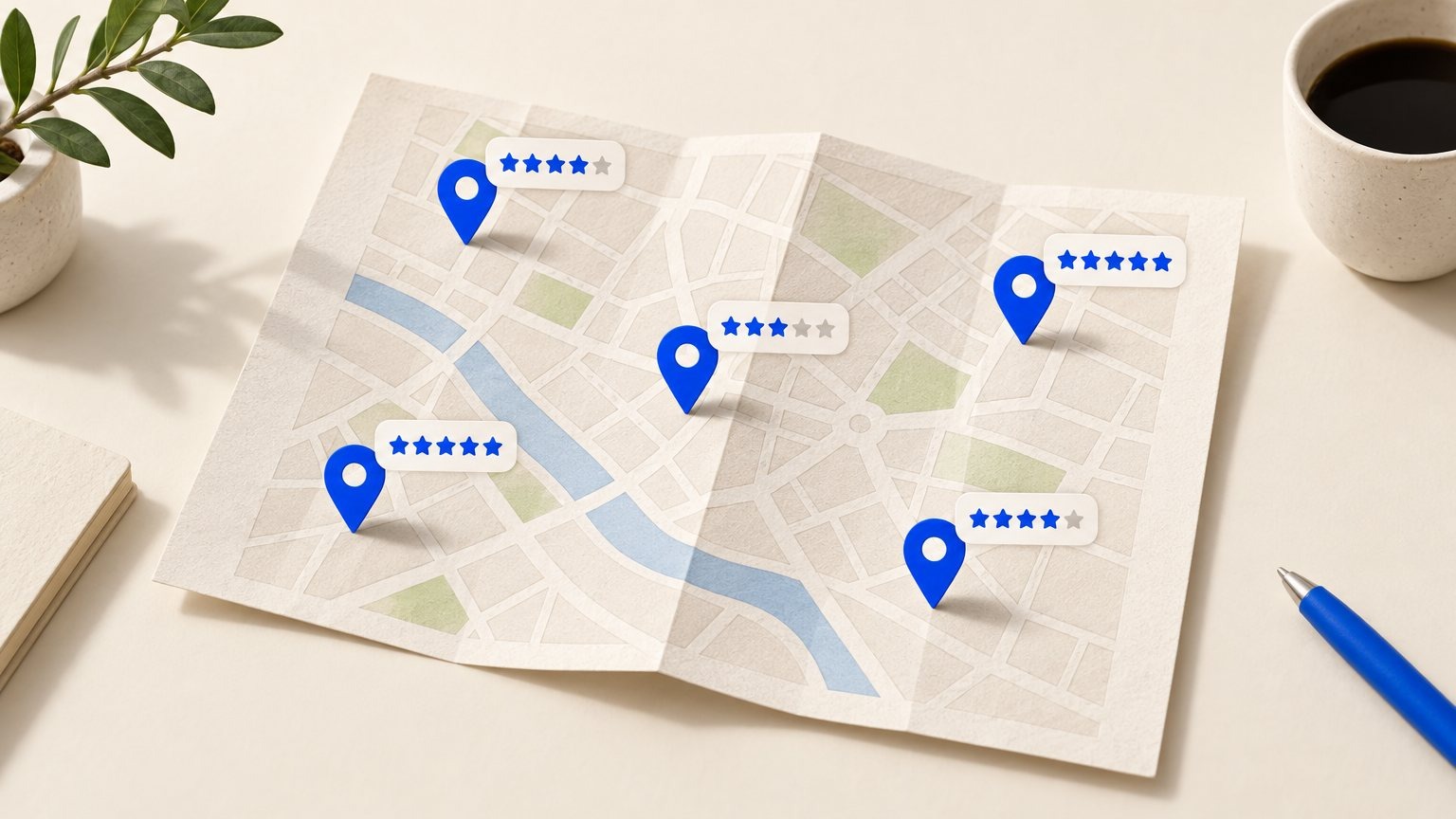
A single-location routine breaks down fast once you add locations or clients. Here's what changes at scale.
For multi-location brands:
-
Assign a regional owner for review checks rather than one corporate person trying to cover every city alone.
-
Standardize reply templates for consistent tone, then let local managers personalize the specifics for their location.
-
Watch for location-specific rating drops, which often point to a staffing or supply issue that isn't visible anywhere else in your reporting.
For agencies managing client accounts:
-
Separate monitoring by client account so feedback doesn't mix in a shared inbox and cause confusion about who handles what.
-
Set a reporting cadence with clients, such as a weekly summary or a monthly trend report, so they can see the value of the monitoring work you're doing.
-
Build escalation rules for which reviews get flagged to the client immediately versus handled directly by your team.
The math explains why this shifts fast. A five-location business checking three platforms each is already 15 logins a week just for the basic check, before anyone replies to anything. That's why teams at this scale often move to a shared dashboard that pulls reviews across every location and platform into one place, instead of asking a regional manager to juggle a dozen sets of credentials.
Manual tracking vs a monitoring tool: which fits your routine
Not every business needs software, and not every business should rely on a spreadsheet forever. Here's how to tell which side of that line you're on.
|
Factor |
Manual tracking fits |
A tool helps more |
|---|---|---|
|
Locations |
1 to 2 |
3 or more |
|
Platforms |
2 to 3 |
4 or more, including niche sites |
|
Weekly time available |
30+ minutes from one person |
Under 15 minutes, or split across a team |
|
Team structure |
Owner-operator |
Manager or agency structure |
|
Reporting needs |
None external |
Client or leadership reporting |
If most of your answers land in the left column, a spreadsheet and a calendar reminder are doing the job already. Don't buy software to solve a problem you've already solved with a checklist.
The real test works for either approach: can you say right now when someone last checked every platform on your list? If that takes more than a few seconds to answer, the routine isn't working yet, and that's true whether you're using a spreadsheet or a dashboard.
Next steps
Pick one platform you haven't checked in the last two weeks and check it today. Note the date, the current rating, and anything new since your last look.
Then write down the five platforms that matter for your business and assign one person to check them on the same day every week, starting with the smallest version of the routine above.
Give it a month before deciding whether you need anything beyond a calendar reminder and a spreadsheet. Most single-location businesses find out the routine was the missing piece, not the tool.
FAQ
How often should a small business check its online reviews?
Weekly is the minimum for most single-location businesses, ideally on the same day each week so nothing gets skipped. If your industry generates reviews quickly, such as restaurants or urgent care clinics, checking every two to three days catches problems before they sit unanswered for long.
What's the difference between review monitoring and social listening?
Review monitoring focuses specifically on ratings and reviews across platforms like Google, Yelp, and industry directories. Social listening is broader, covering general brand mentions, hashtags, and conversation across social media, which matters more for marketing strategy than for catching a specific bad review fast.
Can I monitor reviews without paying for software?
Yes, for one or two locations with two to three platforms, a spreadsheet and a weekly calendar reminder can cover the routine described above. It takes more manual time, usually 25 to 30 minutes a week, but it works fine until the number of locations or platforms grows.
Who should be responsible for review monitoring on a small team?
One named person, even if it's not their main role. Shared responsibility across a team without a clear owner is the most common reason reviews get missed, since everyone assumes someone else is checking.