Buying property in Sydney is a major financial commitment. Whether you're purchasing your first home, upgrading to a larger property, or building an investment portfolio, it is easy to focus on the visible aspects of a home. Freshly painted walls, renovated kitchens, landscaped gardens, and stylish interiors can create a strong first impression.
However, what buyers see during an open inspection is often only part of the story.
Many of the most expensive property issues are hidden from view. Structural defects may exist behind walls, pest activity can remain undetected beneath floors, and moisture problems may be concealed inside roof cavities for years. These are the types of issues that can quickly turn an exciting purchase into an expensive repair project.
This is why obtaining a professional building and pest inspection Sydney buyers trust is one of the most important steps in the purchasing process. A comprehensive inspection provides valuable insight into the true condition of a property before contracts become unconditional.
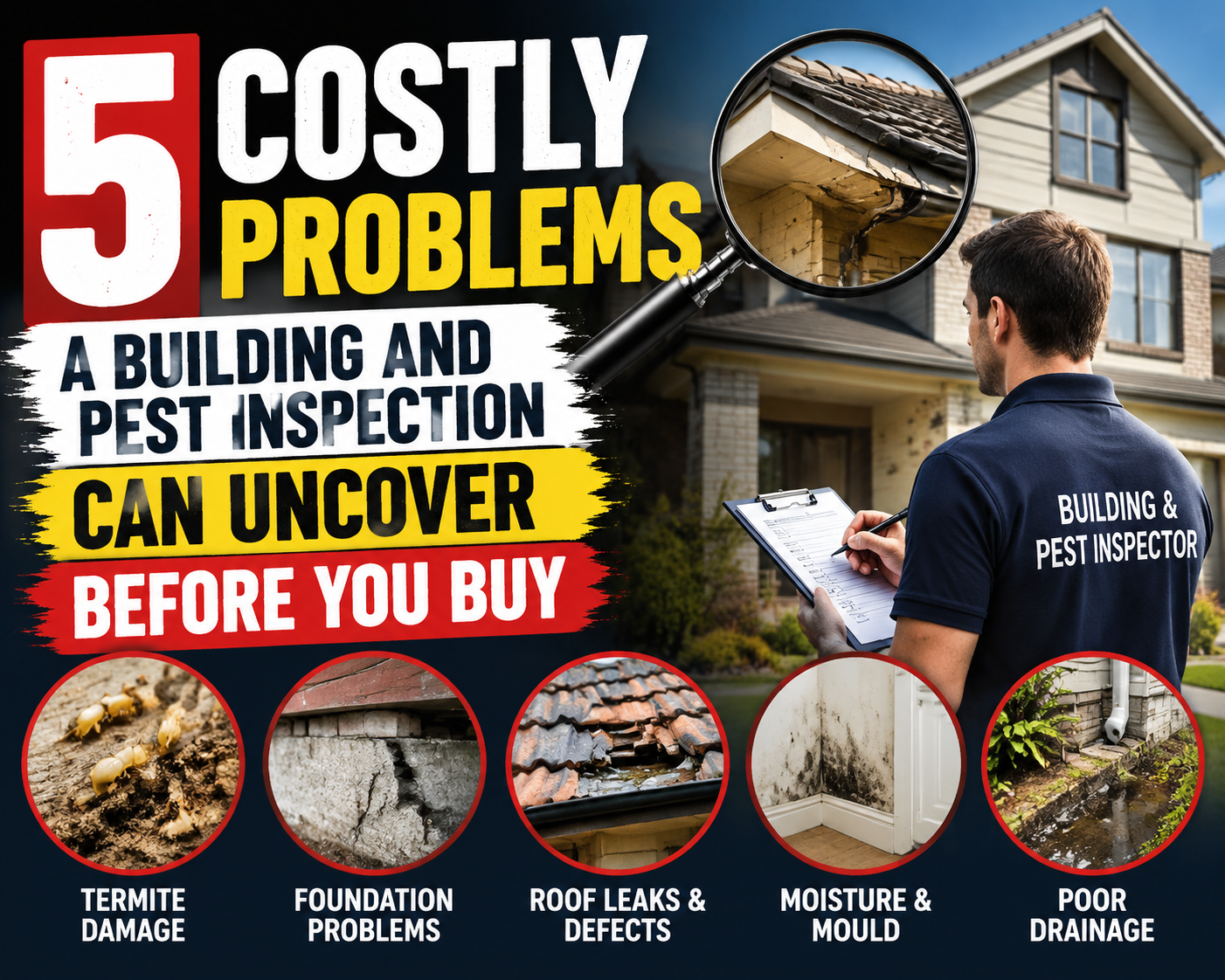
Here are five common and potentially costly problems that inspections frequently uncover.
1. Termite Activity and Timber Damage
Few property issues concern buyers more than termites, and for good reason.
Termites cause millions of dollars in damage to Australian homes every year. Unlike many other pests, they often remain hidden until substantial structural damage has already occurred.
A termite infestation can develop inside wall cavities, roof timbers, subfloors, and other concealed areas without obvious warning signs. Homeowners may not realise there is a problem until doors stop closing properly, floors become uneven, or timber begins to sound hollow.
During a pest inspection, specialists look for evidence of:
-
Active termite colonies
-
Previous termite damage
-
Mud tubes and entry points
-
Conditions that attract termites
-
Moisture sources that increase infestation risk
Even if no active termites are present, identifying conditions that may encourage future infestations can help buyers understand potential risks and maintenance requirements.
2. Subfloor and Foundation Problems
Many structural issues begin beneath the home.
The subfloor and foundation support the entire structure, making them critical areas during a property inspection. Unfortunately, these are also areas that many buyers rarely have the opportunity or expertise to assess themselves.
Inspectors commonly identify problems such as:
-
Foundation movement
-
Uneven settlement
-
Cracked piers
-
Inadequate ventilation
-
Excess moisture beneath the property
-
Timber deterioration
Small structural movements can be a normal part of a home's ageing process. However, more significant movement may indicate drainage issues, reactive soils, or foundation defects that require specialist attention.
The earlier these problems are identified, the easier it becomes for buyers to assess the true cost of ownership before proceeding with the purchase.
3. Roof Defects and Water Entry Points
The roof is one of the hardest parts of a property for buyers to inspect properly.
From ground level, everything may appear to be in good condition. However, a closer examination can reveal problems that are difficult to detect during a standard property viewing.
Common roof-related findings include:
-
Broken roof tiles
-
Damaged flashing
-
Rusted roofing materials
-
Blocked gutters
-
Sagging roof structures
-
Evidence of previous leaks
Water intrusion is often one of the biggest concerns.
A small roof leak may seem insignificant, but water can travel considerable distances through a property before becoming visible. By the time staining appears on ceilings or walls, hidden damage may already exist within insulation, timber framing, and plasterboard.
A thorough building inspection helps identify these vulnerabilities before they become expensive repair projects.
4. Moisture Issues and Hidden Mould Growth
Water-related problems are among the most frequently discovered defects during property inspections.
Moisture can enter a home through leaking roofs, damaged plumbing, inadequate waterproofing, poor drainage, or rising damp. Because the process is often gradual, damage can remain hidden for extended periods.
Inspectors frequently uncover:
-
Damp subfloors
-
Leaking plumbing connections
-
Bathroom waterproofing failures
-
Water-damaged walls
-
Condensation issues
-
Hidden mould growth
Mould presents more than just a cosmetic problem. It can affect indoor air quality and create health concerns for occupants, particularly those with allergies or respiratory conditions.
More importantly, mould is often a symptom of a larger moisture problem that requires investigation and repair.
Understanding the source of the moisture is often more important than simply removing visible mould.
5. Poor Drainage Around the Property
Many buyers focus their attention on the home itself while overlooking the surrounding land.
However, drainage problems can have a significant impact on the condition and longevity of a property.
Poor drainage may contribute to:
-
Foundation movement
-
Soil erosion
-
Rising damp
-
Water pooling near structures
-
Landscape instability
-
Increased termite activity
Sydney's weather can produce heavy rainfall events that place significant stress on drainage systems. A property that appears perfectly dry during an inspection day may experience problems during wetter periods of the year.
Inspectors assess site grading, stormwater management, downpipe discharge locations, and drainage performance to identify risks that may not be immediately obvious.
Addressing drainage issues early can prevent a range of future structural and moisture-related problems.
Why Inspection Reports Are Valuable Negotiation Tools
One of the most overlooked benefits of a building and pest inspection is the negotiating power it provides.
When buyers have a clear understanding of a property's condition, they can make more informed decisions about price and future costs.
Depending on the findings, buyers may choose to:
-
Negotiate a lower purchase price
-
Request repairs before settlement
-
Obtain specialist assessments
-
Budget for future maintenance
-
Reconsider the purchase entirely
The goal is not necessarily to find a perfect property. Every home has maintenance requirements. The objective is to understand what those requirements are before making a financial commitment.
A detailed inspection report provides the information needed to make decisions with confidence rather than relying solely on appearance or assumptions.
The Cost of an Inspection Versus the Cost of a Surprise
Some buyers are tempted to skip inspections in competitive markets to make their offer more attractive.
While this may occasionally help secure a property, it also increases risk significantly.
The cost of repairing structural movement, termite damage, roofing defects, or moisture issues can quickly run into thousands—or even tens of thousands—of dollars. Compared to those potential expenses, the cost of a professional inspection is relatively small.
More importantly, inspections provide peace of mind.
Knowing exactly what you are buying allows you to move forward confidently, plan future maintenance, and avoid unexpected financial shocks after settlement.
Final Thoughts
No property is completely free of defects. Even well-maintained homes will typically have minor maintenance issues identified during an inspection.
The value of a professional building and pest inspection Sydney service lies in uncovering the problems that buyers cannot easily see themselves.
Termite activity, foundation movement, roof defects, moisture damage, and drainage issues are among the most common findings that can significantly impact a property's value and long-term ownership costs.
Before committing to one of the largest purchases of your life, investing in a thorough inspection can provide the clarity needed to make a smarter and more informed decision. The goal is not to find a flawless home. It is to understand exactly what you are buying and ensure there are no costly surprises waiting after settlement.