
- Post Title
- How Small Businesses Can Still Win on Google Ads: A Strategic Guide
- Posted Time
- 09/19/2025
- Author
- Michael Doyle
- Advertiser
- Michael Doyle
About this post
Post Description:
The digital advertising landscape has undoubtedly shifted. With enterprise-level brands commanding significant portions of Google Ads real estate, many small and medium-sized enterprises (SMEs) are questioning whether they can still achieve meaningful returns on their advertising investment.
Recent industry research suggests that over 50% of marketing professionals believe small businesses are being priced out of Google Ads. However, this perception doesn't tell the complete story. Whilst the challenges are real, the opportunities for strategic, well-executed campaigns remain substantial.
The Current Challenges Facing SMEs on Google Ads
1. Escalating Cost-Per-Click (CPC) Rates
Rising CPCs across most industries mean smaller advertising budgets simply don't stretch as far as they once did. Where a £1,000 monthly budget might have generated 500 clicks two years ago, that same investment may now yield considerably fewer opportunities for customer acquisition.
2. Data Volume Dependencies
Google's automated bidding strategies and Responsive Search Ads (RSAs) require substantial data volumes to optimise effectively. SMEs with modest budgets often find themselves in a catch-22 situation: they need data to optimise, but require optimised campaigns to generate sufficient data economically.
3. Resource and Expertise Gaps
Successful Google Ads management requires continuous attention to bid strategies, keyword optimisation, ad copy testing, and performance analysis. Whilst larger organisations typically employ dedicated PPC specialists or engage specialist agencies, many SMEs lack these resources and attempt to manage campaigns in-house without adequate expertise.
4. Brand Recognition Disadvantages
Established brands benefit from existing customer trust and recognition, leading to higher click-through rates (CTRs) and conversion rates. SMEs face the dual challenge of not only attracting clicks but also building credibility and trust simultaneously.
There is still hope for small enterprises in spite of these obstacles.
Even if larger companies have an advantage in the PPC market, small businesses may still compete if they have a well-rounded strategy, use intelligent targeting, and are prepared to adjust and stay current with platform changes.
Or as Hana Kobzová puts it – small businesses just need to outsmart, not outspend.

Read also: Google Ads Budgeting Guide for Small Businesses
Strategic Approaches for SME Success
Despite these obstacles, small businesses can still achieve profitable results on Google Ads through intelligent strategic positioning and tactical execution.
Strategy 1: Precision Targeting Over Volume
The most effective approach for resource-constrained businesses is to prioritise traffic quality over quantity. Rather than attempting to capture broad market segments, successful SME campaigns focus intensely on highly qualified prospects.
Implementation approach:
Develop detailed customer personas based on actual purchase data
Utilise specific long-tail keywords that indicate strong purchase intent
Create tightly themed ad groups that speak directly to niche audience segments
Implement geographical targeting to focus on areas with highest conversion potential
Example: A boutique wedding catering service achieves better results targeting "luxury wedding catering [city name]" rather than broad terms like "catering services."
Real-world case study: An emergency plumbing service in Sydney with a £230 daily budget (approximately $300 AUD) can expect 1-2 high-quality leads per day by targeting specific terms like "emergency plumber blocked drain Sydney" rather than generic "plumber" keywords, despite CPCs ranging from £12-70 per click in competitive markets.
Strategy 2: Robust Conversion Tracking and Attribution
For SMEs where every pound of advertising spend must demonstrate clear return on investment, accurate conversion tracking becomes critical rather than optional.
Essential tracking implementations:
Set up comprehensive conversion actions beyond just form submissions (phone calls, email enquiries, brochure downloads)
Implement enhanced ecommerce tracking for detailed transaction data
Utilise Google Analytics 4 integration for complete customer journey visibility
Configure attribution models that reflect your actual sales cycle
Without proper tracking, optimisation becomes guesswork rather than strategic decision-making.
Strategy 3: Leverage Creative Tools and Automation
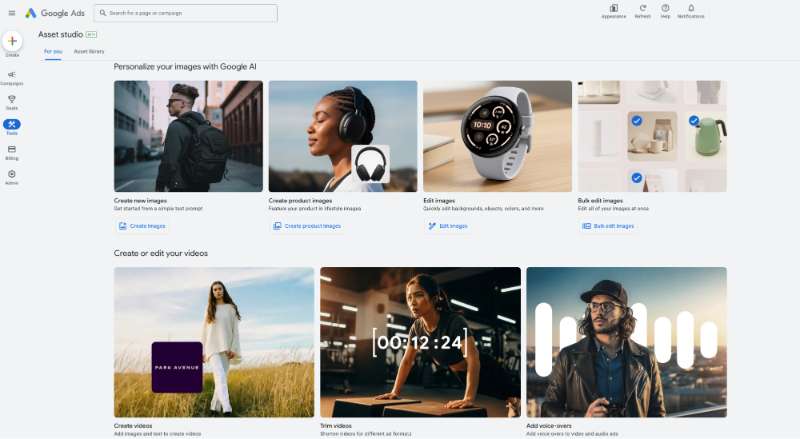
Google's Asset Studio and automated creative features have democratised high-quality ad creation. SMEs can now produce professional-standard visual content without significant production budgets.
Creative optimisation tactics:
Utilise Asset Studio for creating brand-consistent imagery and video content
Test multiple headline and description combinations through RSAs
Implement ad customisers for dynamic, relevant messaging
Maintain brand consistency whilst allowing automated systems to optimise performance
Strategy 4: Multi-Platform Diversification
Smart SMEs don't limit themselves to Google's ecosystem. Alternative platforms often provide better cost-efficiency and audience reach for specific business types.
Platform alternatives to consider:
Microsoft Advertising: Often delivers lower CPCs with access to a professional demographic through Bing and LinkedIn partnerships
Google Local Services Ads: A game-changing pay-per-lead model where you only pay for actual customer contacts (phone calls or messages), not clicks. Available in major markets including Australia, these ads feature the "Google Guaranteed" badge and appear above traditional search ads
Meta Advertising: Excellent for visual products and local service businesses with strong targeting capabilities
LinkedIn Ads: Particularly effective for B2B services and professional consulting
Industry-specific platforms: Depending on your sector, niche advertising platforms may offer superior targeting and cost-efficiency
Realistic Expectations: What Small Businesses Can Actually Achieve
Understanding realistic performance expectations helps SMEs set appropriate budgets and goals. Based on industry data across various sectors:
Typical Performance Ranges:
Cost-per-click: Varies dramatically by industry, from £2-5 for some B2B services to £15-70+ for competitive local services
Conversion rates: Home services average 7-8%, whilst B2B services may see 2-5% but with higher transaction values
Lead volume: A well-optimised £200-300 daily budget typically generates 1-3 qualified leads per day in competitive markets
Factors affecting performance:
Industry competition levels
Geographic market size and saturation
Service urgency (emergency services typically see higher conversion rates)
Seasonal fluctuations and market timing
Quality of landing page experience and conversion funnel
Maximising Campaign Performance: Advanced Techniques
Call-Only Campaigns For service-based businesses where phone contact is the primary conversion goal, call-only ads can deliver superior results. These campaigns focus entirely on generating phone calls rather than website visits, often achieving higher conversion rates for urgent services.
Negative Keyword Strategy Implementing comprehensive negative keyword lists prevents budget waste on irrelevant searches. For example, a plumbing service should exclude terms like "plumbing school," "plumbing jobs," or "DIY plumbing" to focus spend on commercial intent queries.
Geographic and Demographic Targeting
Utilise radius targeting around your service areas
Implement bid adjustments based on location performance data
Consider demographic targeting based on your ideal customer profile
Use location-based ad customisers for personalised messaging
Budget Allocation Strategy
Implement dayparting to focus spend during peak conversion hours
Utilise device bid adjustments based on performance data
Apply geographic bid modifiers to prioritise high-performing locations
Create separate campaigns for brand vs. non-brand terms
Keyword Strategy Refinement
Focus on commercial intent keywords rather than informational queries
Utilise negative keyword lists to prevent irrelevant traffic
Implement match type strategies that balance reach with relevance
Regular keyword performance audits to reallocate budget to top performers
Landing Page Optimisation
Ensure message consistency between ads and landing pages
Implement conversion rate optimisation (CRO) best practices
Create dedicated landing pages for different campaign themes
Regular A/B testing of page elements to improve conversion rates
Measuring Success: KPIs That Matter for SMEs
Rather than focusing solely on volume metrics, SMEs should prioritise:
Cost per acquisition (CPA) relative to customer lifetime value
Return on ad spend (ROAS) with proper attribution
Quality Score improvements indicating relevance optimisation
Impression share in targeted geographic markets
Conversion rate trends across different traffic sources
The Path Forward
The Google Ads landscape has indeed become more challenging for small businesses, but it hasn't become impossible. Success requires a shift from attempting to compete directly with enterprise-level budgets to outsmarting larger competitors through superior strategy, targeting precision, and operational efficiency.
The businesses that thrive are those that view their size not as a limitation but as an advantage—enabling them to be more agile, more focused, and more responsive to market opportunities than their larger competitors.
Key takeaways for SME success:
Quality targeting trumps broad reach every time
Accurate data and tracking form the foundation of profitable campaigns
Creative tools and automation can level the playing field