
- Post Title
- The Anatomy of a Suit: Understanding the Key Components and Their Importance
- Posted Time
- 08/14/2024
- Author
- Top4 User
- Advertiser
- Top4 User
About this post
Post Description:
A well-tailored suit is more than just clothing; it’s a statement of elegance, professionalism, and personal style. Whether for a business meeting, wedding, or special event, the way a suit fits can make all the difference. At Berez Private Tailor, we believe that understanding the construction of a suit is essential to appreciating its craftsmanship and making informed choices. As your bespoke tailor in New Jersey, we are dedicated to educating our clients on the intricacies of suit construction to ensure the perfect suit fitting every time.
The Foundation: The Suit Jacket
Shell Fabric
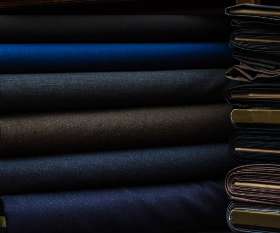
The choice of shell fabric is fundamental to the suit's character and function. Common options include:
- Wool: Renowned for its versatility, wool is suitable for all seasons and occasions. Its breathability and durability make it a popular choice.
- Linen: Ideal for warmer climates, linen offers a light and airy feel, though it tends to wrinkle more easily.
- Cotton: A casual option that provides comfort and a relaxed look, suitable for less formal settings.
- Blends: Combining different fibers, blends offer unique characteristics, balancing durability, comfort, and cost.
Canvas and Interlining
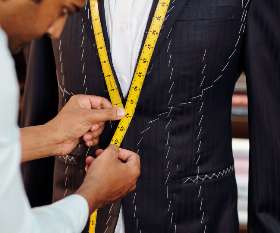
The canvas and interlining within a suit jacket provide structure and shape. The construction type directly influences the suit's fit and longevity:
- Full Canvas: Extending through the entire jacket, full canvas construction allows the fabric to drape naturally over the body, enhancing comfort and movement.
- Half Canvas: This construction covers the chest and lapels, offering a balance between structure and flexibility at a more accessible price point.
- Fused Construction: While more affordable, fused construction uses glue to attach the fabric, which may compromise the drape and durability.
A well-canvassed jacket ensures that your suit fitting feels comfortable and looks impeccable, offering a silhouette that stands the test of time.
Shoulder Construction
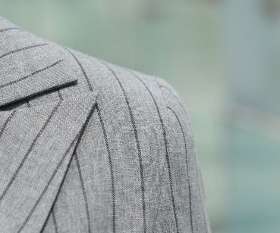
Shoulder construction plays a pivotal role in defining the suit's silhouette:
- Natural: Offers a softer, more relaxed fit, ideal for a casual or contemporary look.
- Padded: Provides a more structured and formal appearance, enhancing the jacket's shape.
- Roped: Features a pronounced seam, creating a sharper, more defined shoulder line.
The choice of shoulder style impacts not only the look but also the comfort of your suit, making it an important consideration in any suit fitting.
Lapels
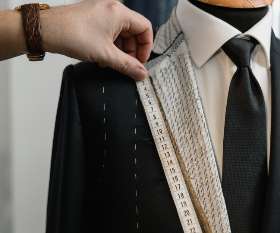
Lapels are a key element of the suit jacket, contributing to its overall style and formality:
- Notch Lapel: The most versatile and commonly seen lapel, suitable for business and formal occasions.
- Peak Lapel: More formal and assertive, often used in double-breasted suits or tuxedos.
- Shawl Lapel: Smooth and rounded, ideal for evening wear or more formal events.
The width of the lapel can influence the overall appearance of the suit, making it a critical aspect of the suit fitting process.
The Lower Half: Trousers
Fabric and Construction
Trousers should ideally mirror the jacket's fabric, ensuring a cohesive look. Proper construction is essential for comfort and a flattering fit:
- Fabric Choices: Wool, cotton, and linen are common, offering a range of textures and weights to suit different occasions and seasons.
- Construction: Well-made trousers with reinforced seams and quality zippers ensure durability and comfort, contributing to the overall success of your suit fitting.
Rise and Pleats
The rise of your trousers determines where they sit on your waist, influencing both style and comfort:
- Low Rise: Sits below the natural waistline, offering a modern, slim look.
- Mid Rise: Sits at the natural waistline, providing a balanced, classic fit.
- High Rise: Sits above the natural waistline, creating a vintage or more formal appearance.
Pleats, whether single or double, can add depth to the trousers and affect the overall silhouette, making them an important consideration in any suit fitting.
Cuffs
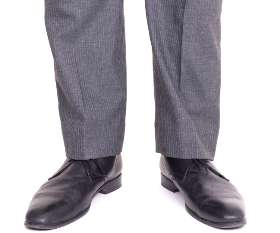
Cuffs can add a touch of distinction to your trousers:
- With Cuffs: Adds weight to the trouser hem, helping them drape better and creating a more formal look.
- Plain Hem: Offers a cleaner, more streamlined appearance, suitable for a modern or minimalist style.
Your choice of cuffs should align with your overall style and the formality of the occasion.
The Finishing Touches: Details Matter
Buttons and Buttonholes
The quality of buttons and the craftsmanship of buttonholes contribute significantly to both the aesthetic and functional aspects of a suit:
- Buttons: Quality buttons, whether made of horn, mother-of-pearl, or metal, enhance the suit's appearance and durability.
- Buttonholes: Functional buttonholes, particularly on the sleeves, are a hallmark of a well-crafted suit, allowing for subtle adjustments and adding to the suit's bespoke charm.
Lining
The lining of a suit jacket plays a crucial role in comfort and durability:
- Comfort: A well-chosen lining ensures that the jacket moves smoothly with your body, providing ease of movement.
- Climate Suitability: Different lining materials offer varying levels of breathability and warmth, making them an important consideration for different climates and seasons.
Conclusion
The quality, fit, and style of a suit are defined by its key components, each playing a vital role in the overall suit fitting experience. Understanding these elements helps you make informed choices when selecting a bespoke suit. At Berez Private Tailor, we are committed to crafting suits that are tailored to your individual needs, ensuring a perfect fit and timeless elegance.
We invite you to visit Berez Private Tailor for a personalized consultation. Experience the difference a truly bespoke suit fitting can make, and let us create a suit that reflects your style and sophistication.